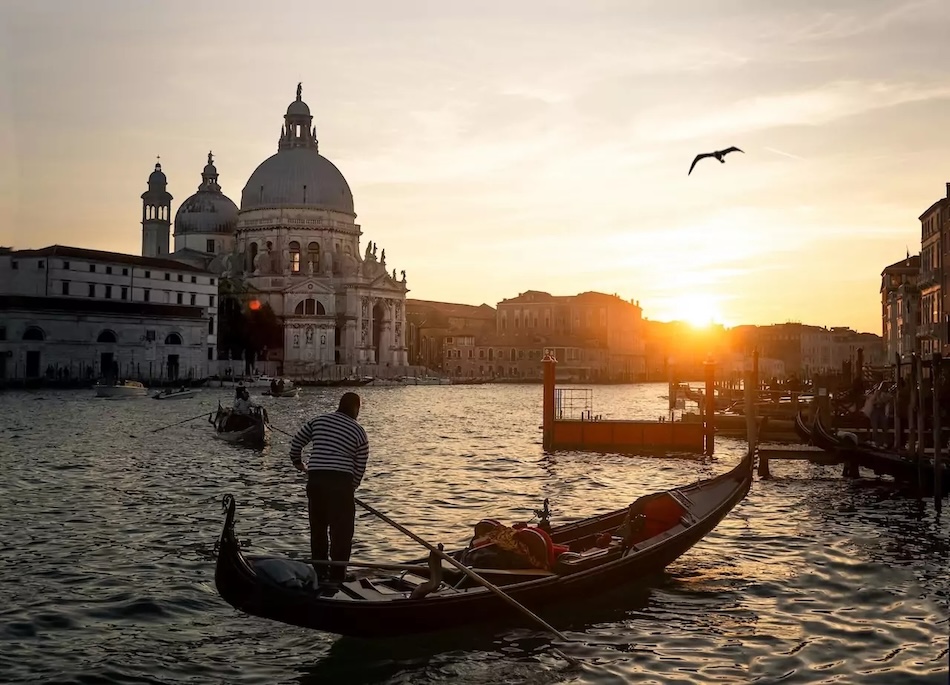
If there’s one thing you can be sure of, it’s that you’ll never get bored in Venice.
There’s so much to see, do, and experience.
I still remember how overwhelming it felt when I was planning my first trips to Venice ! Trying to choose the right things to do took me forever.
But today, things have changed! After visiting Venice around ten times, I feel like it’s finally time to share my top 10 must-do experiences for a first visit.
If you’re planning your trip and wondering what to include in your itinerary, this guide will help you focus on the essentials 🙂
☞ You may also like:
Table of Contents
1. Be Amazed by St. Mark’s Square
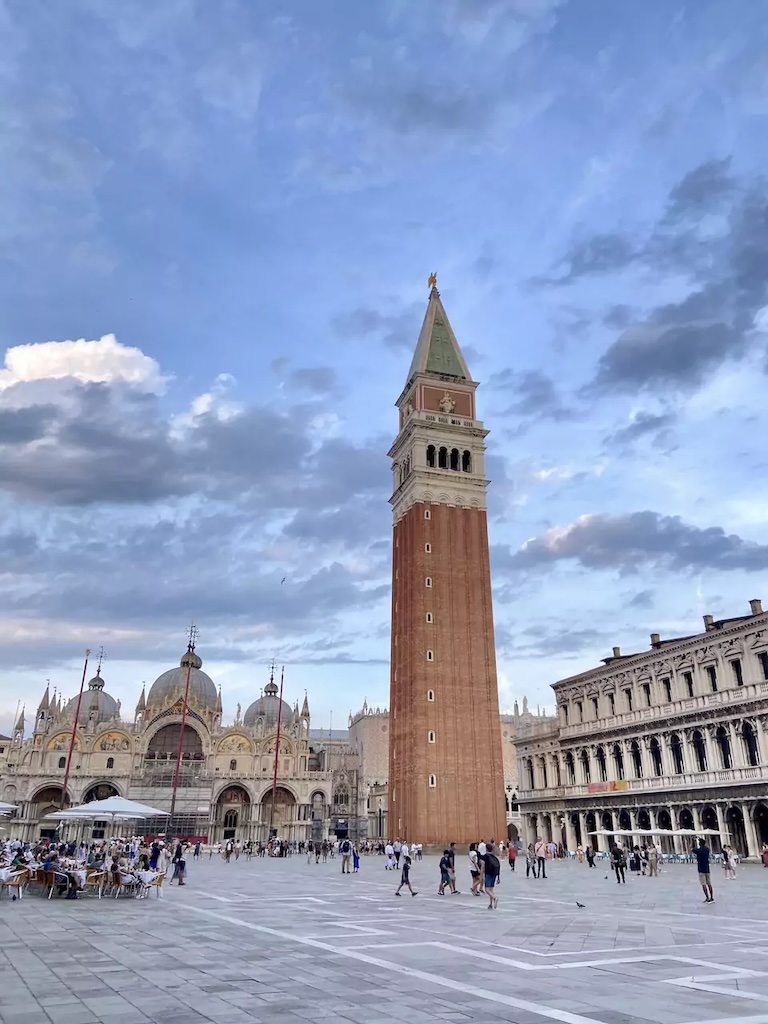
You simply can’t visit Venice without stopping by St. Mark’s Square.
It’s the beating heart of the city.
A place where you instantly feel the magic of Venice… and yes, the crowds too.
Surrounded by St. Mark’s Basilica, the Doge’s Palace, and the Campanile, the square is impressive in every way.
Its scale, its architecture, the details everywhere you look…
Even after several trips, I still get the same feeling when I arrive.
Like stepping into a life-sized theater set.
☞ My tip: visit at different times of the day
- Early in the morning, at sunrise, when the square is almost empty and the light is soft
- Late afternoon, when the atmosphere is lively and full of energy
- At night, when the buildings are lit up and the whole place feels truly magical
2. Visit St. Mark’s Basilica (an absolute must)
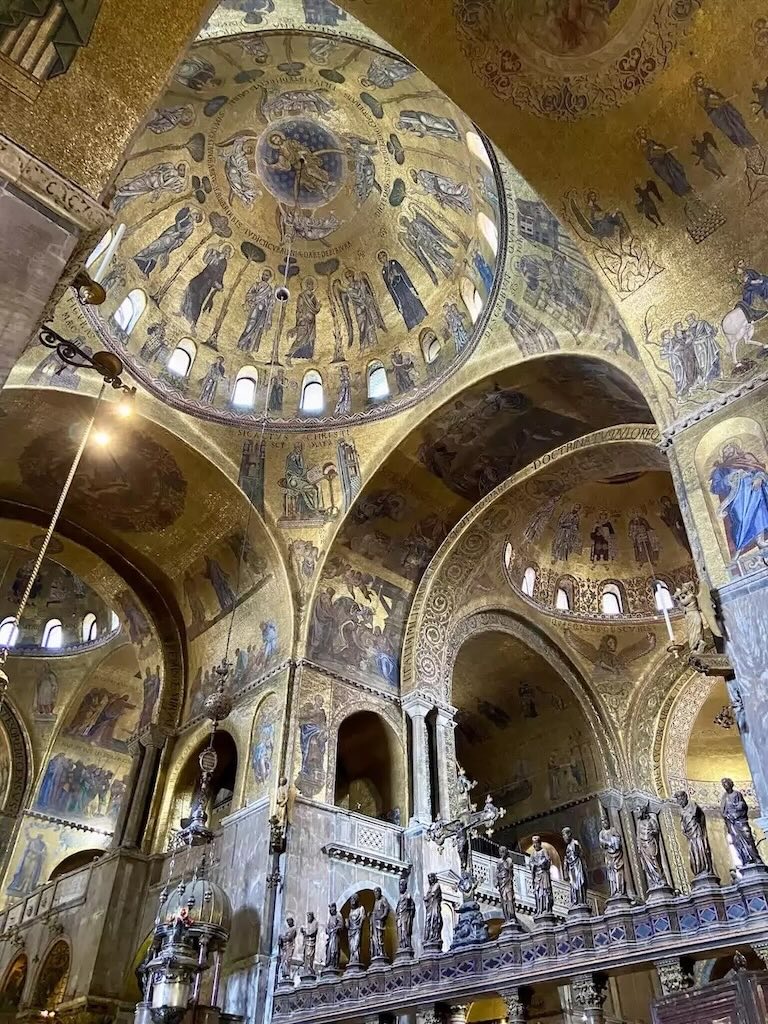
A true masterpiece of Byzantine architecture, St. Mark’s Basilica is one of the most beautiful churches in the world.
No exaggeration.
Its spectacular façade is only a preview of what’s inside.
Golden mosaics covering entire ceilings,
a quiet, almost mystical atmosphere,
and an incredible level of detail everywhere you look.
It’s hard to fully describe — you really have to see it for yourself.
☞ My personal highlights here? The nave, of course — covered in gold mosaics — and the view from the terraces, right beneath the famous Horses of St. Mark.
☞ How to visit St. Mark’s Basilica?
There are several options, depending on what you’re looking for:
🔹 Standard entry (no skip-the-line)
- Around €3
- No reservation needed
- Very long lines outside, especially in high season
- Access limited to the ground floor (main nave)
- No explanations inside (audio guide available for an extra fee)
☞ Best if you’re visiting in low season, planning a quick visit, and don’t mind waiting in line.
🔹 Skip-the-line entry (choose your areas)
For me, this is the best value option to visit the basilica.
- No waiting
- Reservation required (☞ Check availability here)
You can choose which areas to visit:
- Ground floor (main nave)
- Pala d’Oro (the famous golden altarpiece)
- The museum
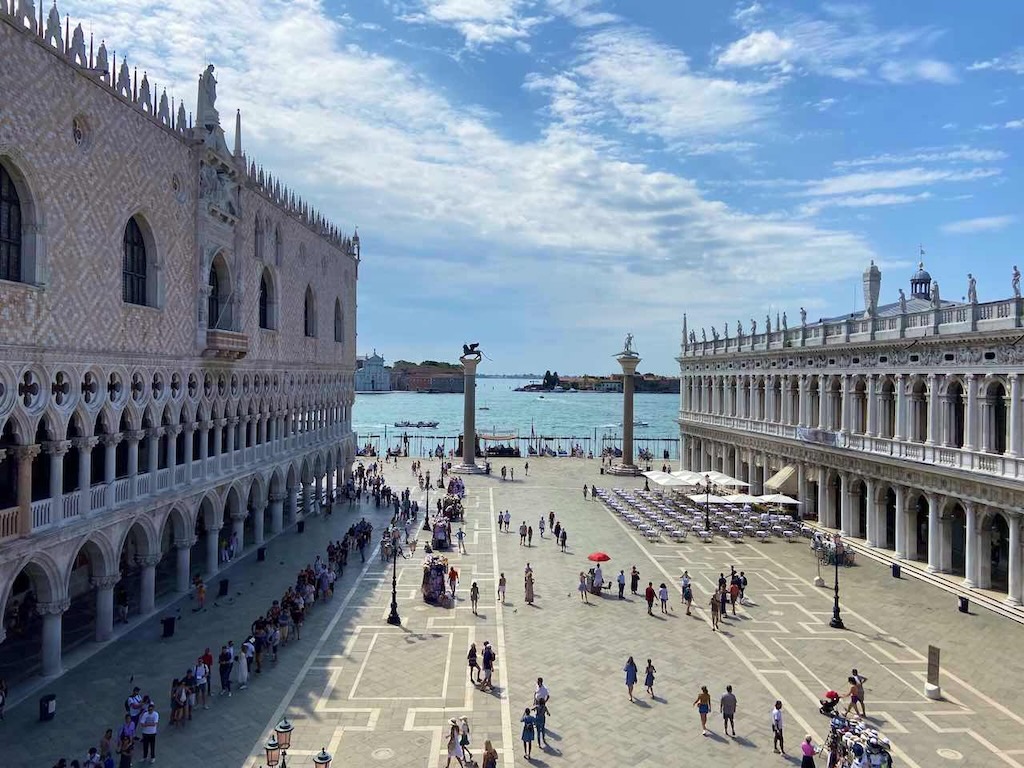
- The terraces, with views over the square and the lagoon
☞ Why I love this ticket? It’s fully customizable and gives access to the most impressive parts of the basilica.
🔹 Guided tours
Available in English (and other languages)
Offered for the basilica only, or combined with a visit to the Doge’s Palace.
☞ A great option if you want to understand the history of the city’s two most famous landmarks.
3. Visit the Doge’s Palace, the Historic Heart of the Venetian Republic
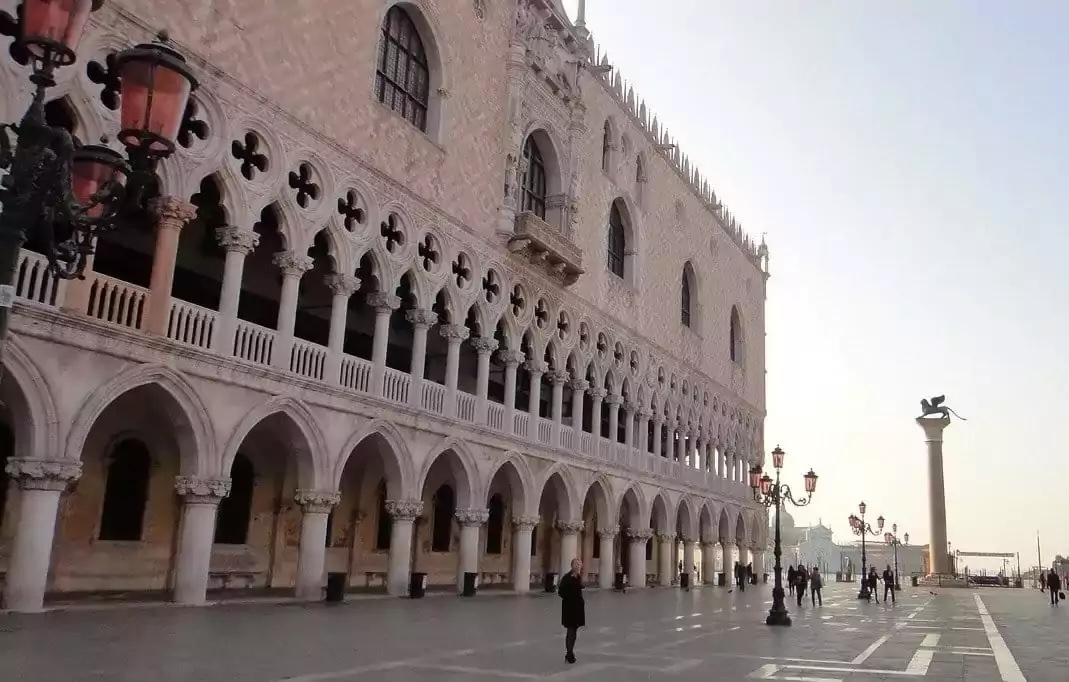
Just as essential as St. Mark’s Basilica, the Doge’s Palace is another iconic landmark in Venice.
Located right on St. Mark’s Square, it offers a fascinating insight into the history of the Venetian Republic — once one of the most powerful states in medieval Europe.
The visit is both informative and visually stunning.
Room after room, you’ll walk through vast, richly decorated halls filled with history and art.
And the visit ends with a completely different atmosphere — the former prison cells.
This is also where Casanova made his legendary escape!
☞ How to visit the Doge’s Palace?
No matter when you’re visiting Venice, it’s always best to book your ticket in advance.
With a pre-booked ticket, you can use a dedicated entrance and skip the line.
It saves a lot of time and makes your day much easier to plan.
Good to know: Tickets for the Doge’s Palace also include access to several museums around St. Mark’s Square:
- Museo Correr
- The Archaeological Museum
- The Marciana Library
They all have to be visited on the same day.
Not essential, but definitely worth it if you’re interested in the history of Venice.
☞ You should also read: How to Visit the Doge’s Palace in Venice? Tips & What Not to Miss
4. Take a Gondola Ride — a Truly Venetian Experience
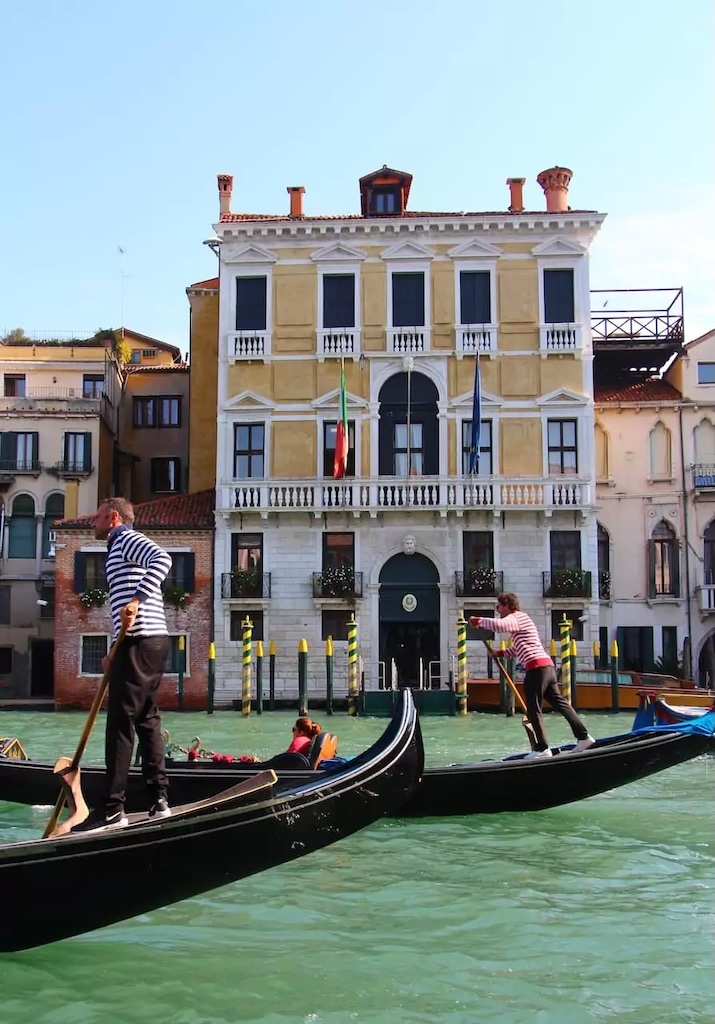
It’s hard to imagine a first trip to Venice without thinking about gondolas.
Even if it may seem a bit touristy at first, a gondola ride is a truly unique experience.
And one of the best ways to feel the city’s atmosphere.
From the canals, Venice feels different.
Quieter. Almost timeless.
The gondola moves away from the busy routes and glides through narrow canals, right alongside palaces you can’t always see from the streets.
☞ How much does a gondola ride cost in Venice?
Prices are officially set by the city:
- €90 for a 30-minute private gondola ride
- Price is per gondola (up to 5 people)
Whether you’re two, three, or five people, the price stays the same.
You don’t need to book in advance for this option.
Simply go to one of the many gondola stations around the city and pay the gondolier directly (cash only).
☞ You should also read: Where to Take the Best Gondola Ride in Venice?
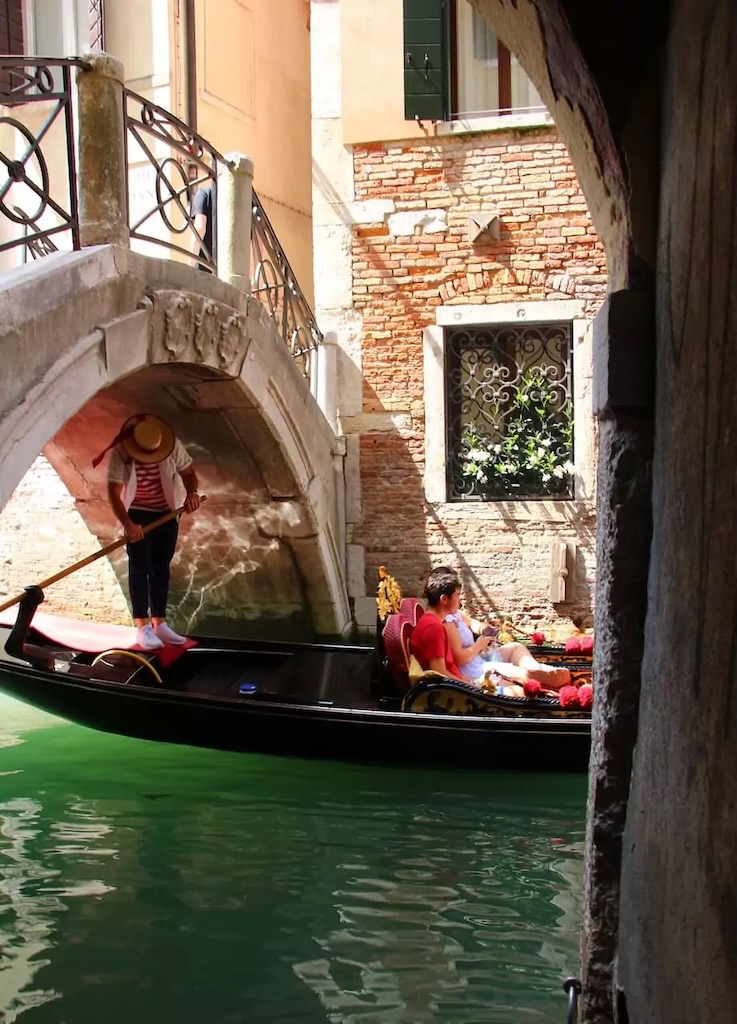
☞ A simple way to spend less:
If you’re looking for a cheaper option, consider a shared gondola ride.
- Around €35 per person
- Shared with a small group (2 to 3 other passengers)
- Similar duration (around 30 minutes)
It’s an effortless way to enjoy this iconic experience.
No need to organize anything — just show up and enjoy the ride.
However, booking in advance is essential for this option.
☞ My practical tips:
Go in the morning or late in the afternoon, when the light is softer
Avoid the busiest hours in the middle of the day, when it’s more crowded and noisy
Skip the gondola stations right next to St. Mark’s Square
Walk a little further, even within the San Marco area, and you’ll find a much calmer atmosphere and a more peaceful ride.
5. Take the Vaporetto Along the Grand Canal and Admire Venice’s Most Beautiful Palaces
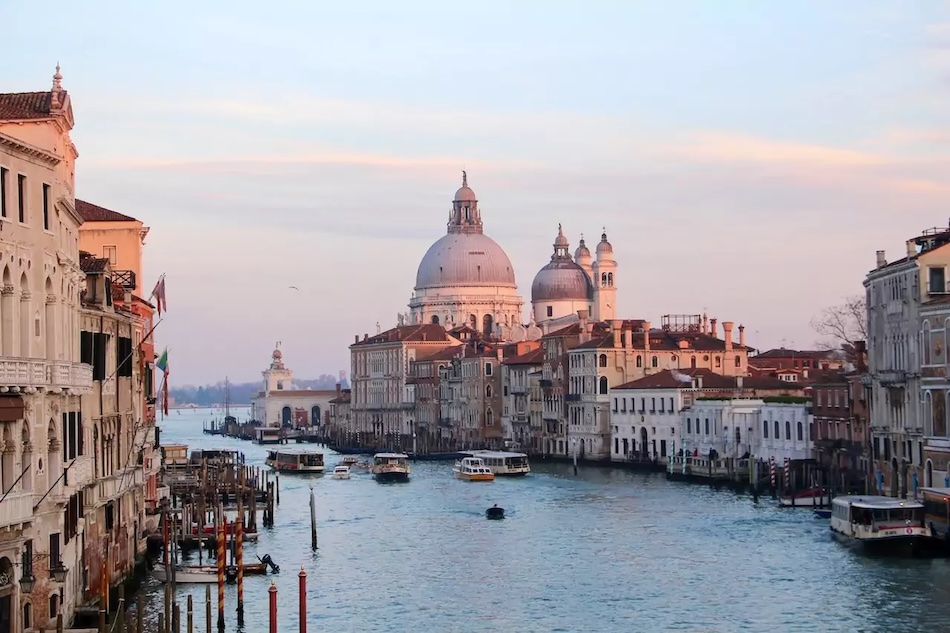
The Grand Canal is the main waterway in Venice.
This wide, S-shaped canal is lined with some of the most beautiful palaces in the city, built over centuries by powerful Venetian families.
It’s always a special place for me.
Even after more than 10 trips to Venice, I never get tired of it.
And for a first visit, it’s an absolute must.
☞ How to explore the Grand Canal
The easiest — and most authentic — way is by vaporetto (Venice’s water bus).
Hop on line 1.
It runs along the entire canal and offers incredible views of the palaces, bridges, and the lively boat traffic.
☞ My practical tips:
- Take the vaporetto more than once, in both directions on line 1. You’ll notice new details every time.
- Avoid rush hours, when boats can get very crowded. If possible, go in the morning for a bit more space on board.
- Try it at night as well. It’s a beautiful and very authentic evening activity
- Single tickets are quite expensive (around €10 per ride). If you plan to use the vaporetto several times, an unlimited pass is definitely worth it.
6. Discover Venice’s Iconic Bridges: Rialto Bridge and the Bridge of Sighs
You can’t visit Venice without crossing its famous bridges.
Two of them are known all over the world: the Rialto Bridge and the Bridge of Sighs.
Very different in style, each one tells a unique part of Venice’s history.
☞ Rialto Bridge, the heart of Venice
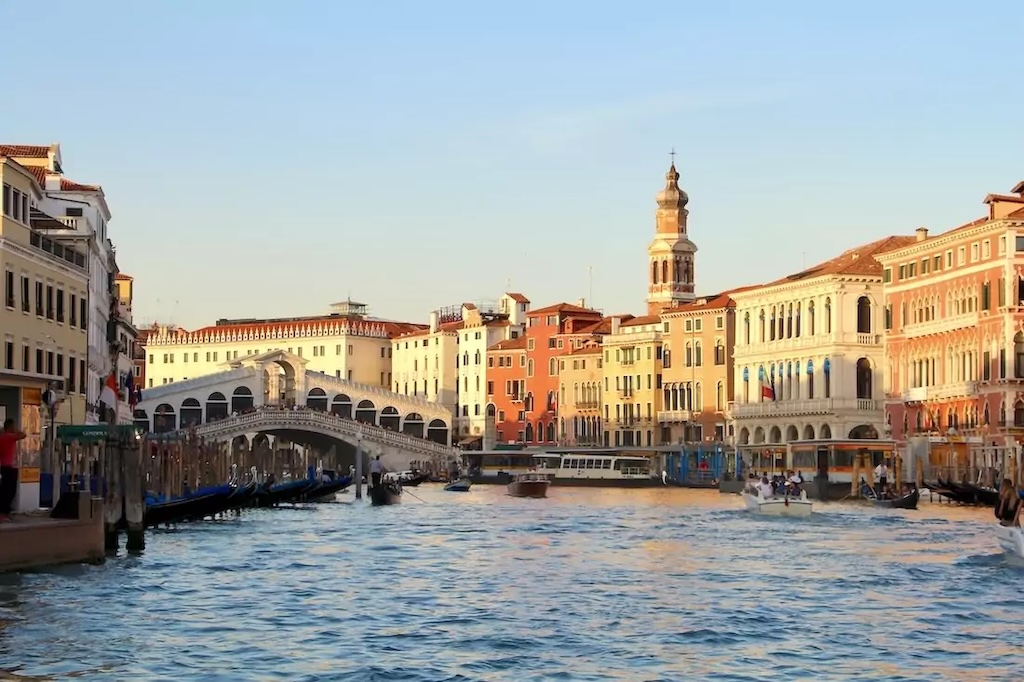
The Rialto Bridge spans the Grand Canal and sits at the center of one of the liveliest areas in the city.
All around it, there’s constant energy.
Shops, markets, restaurants… and a steady flow of boats and people.
It connects three neighborhoods — San Marco, San Polo, and Cannaregio — making it a key point in the city.
Even if the area is very touristy, the bridge itself remains impressive.
And the views over the Grand Canal are beautiful.
Built in the late 16th century, it’s the oldest bridge crossing the Grand Canal.
It was constructed in stone to replace an earlier wooden bridge that kept collapsing.
For centuries, it stood at the center of Venice’s commercial life — especially thanks to the nearby Rialto Market.
☞ The Bridge of Sighs, Venice’s most romantic bridge
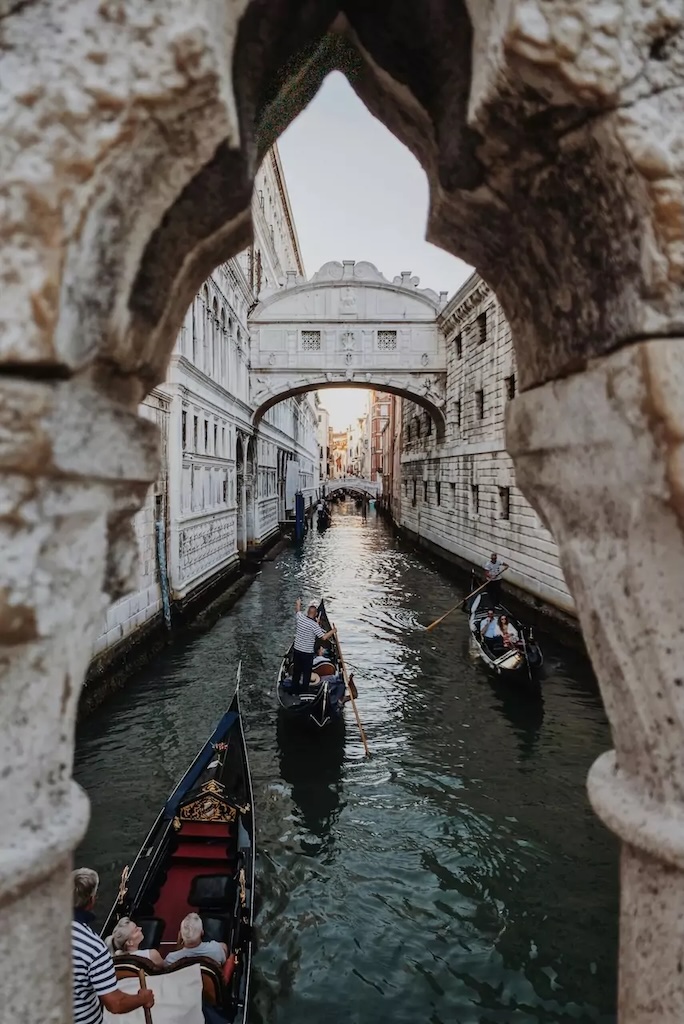
A little further south, just steps from St. Mark’s Square, you’ll find the famous Bridge of Sighs.
Smaller and more discreet than the Rialto Bridge, it connects the Doge’s Palace to the former prisons.
Back in the days of the Venetian Republic, prisoners would cross this bridge on their way to their cells — taking one last look at the lagoon… With a sigh.
That’s where the name comes from.
Today, the most popular viewpoint is from Ponte della Paglia, right in front of the bridge.
Just so you know — it’s almost always crowded.
For a quieter view, head to Ponte della Canonica, just a short walk away.
7. Enjoy a Panoramic View of Venice from St. Mark’s Campanile
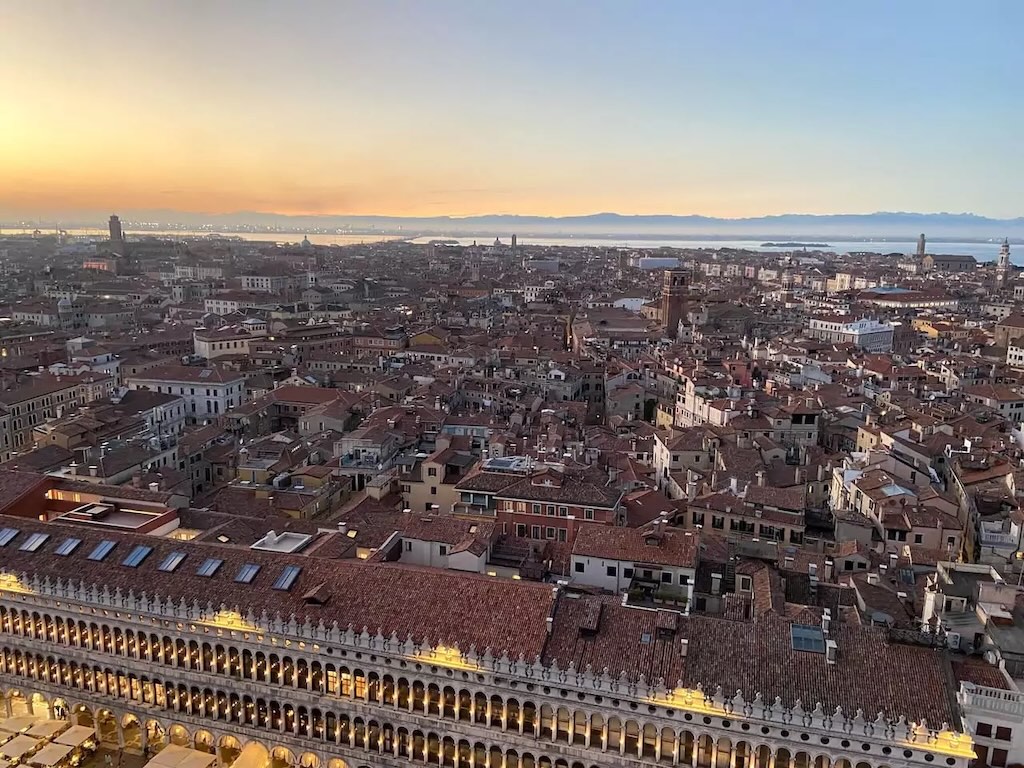
It’s no secret — everything looks better from above.
Located in St. Mark’s Square, the Campanile offers one of the best views over Venice and the lagoon.
The good news?
There’s an elevator, so it’s accessible to everyone.
Once at the top, the view is breathtaking.
On a clear day, you can even spot the Alps.
It’s one of my favorite places in Venice.
And at sunset, the atmosphere becomes truly magical.
☞ My practical tips:
- Be prepared — lines can get quite long on busy days.
- If you can, go later in the day for a more relaxed experience.
8. Escape to Murano and Burano for a Few Hours
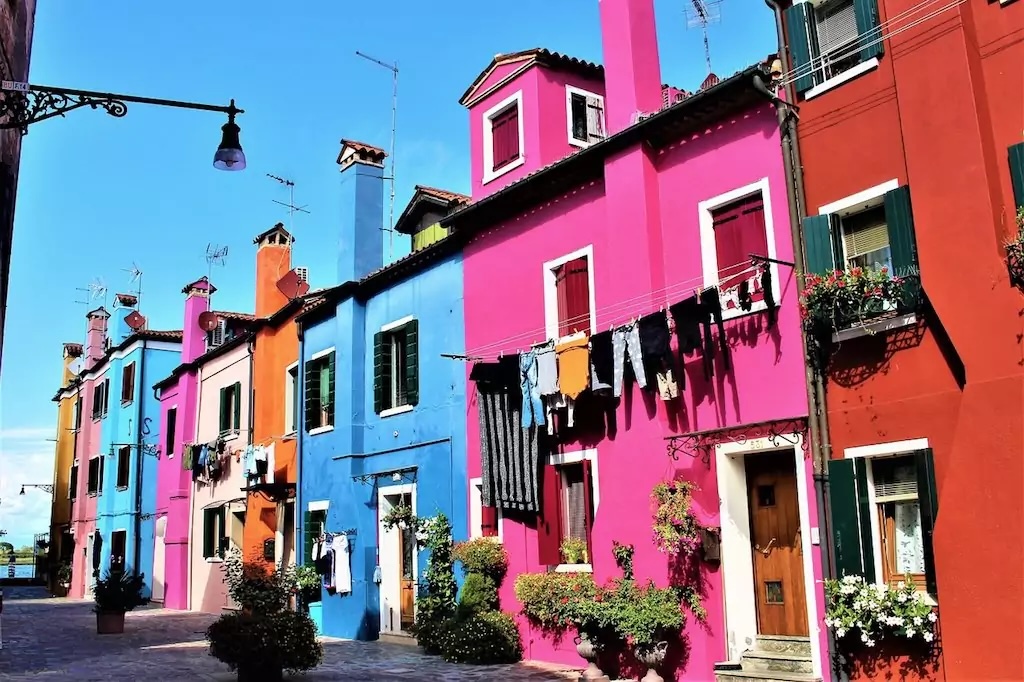
Venice is not just its historic center.
The islands of the lagoon are an essential part of its identity.
They offer a different side of Venice — shaped by local traditions and postcard-perfect scenery.
Murano and Burano are the two most visited islands.
☞ Murano, the island of glass
Murano is world-famous for its glassmaking tradition, dating back to the 13th century.
This unique Venetian craft has stood the test of time and is still renowned today.
Some of the finest glass pieces in the world are made here.
If you’d like to watch a glassblowing demonstration or visit a workshop, it’s the place to be.
☞ Burano, the island of colorful houses
My personal favorite in the lagoon.
Burano feels like a real-life postcard.
Everything is photogenic — the brightly painted houses, laundry hanging in the streets, and charming restaurants along the canals.
This is the kind of place where you slow down.
Wander through the streets, enjoy the atmosphere… and don’t worry, the island is so small you won’t get lost.
☞ My practical tips for visiting the islands:
Both islands are easy to reach by vaporetto:
- Murano: about 15 minutes from Venice
- Burano: about 45 minutes
If you only have half a day, it’s best to focus on just one island, depending on what you’re most interested in.
If you’d like to visit both, plan a full day.
And if you’d rather keep things simple, you can also join an organized tour to the islands.
9. Enjoy Incredible Food Everywhere You Go

In Venice, you don’t just visit — you eat. And you eat well.
It’s honestly one of my favorite things about the city.
That love of good food is everywhere, and every moment of the day becomes an excuse to try something new.
From a cappuccino and pastry in the morning,
to a plate of clam pasta at lunch,
to a spritz with cicchetti in the evening…
You simply can’t experience Venice without taking time to enjoy its food.
Over the years, I’ve tried a wide range of places — from well-known restaurants to small local spots.
I’ve gathered all of these experiences into a dedicated article :
☞ The Best Restaurants in Venice: My Favorite Places to Eat
(And yes… it took many hours of research — and tasting 😋)
10. Explore Venice’s Different Neighborhoods
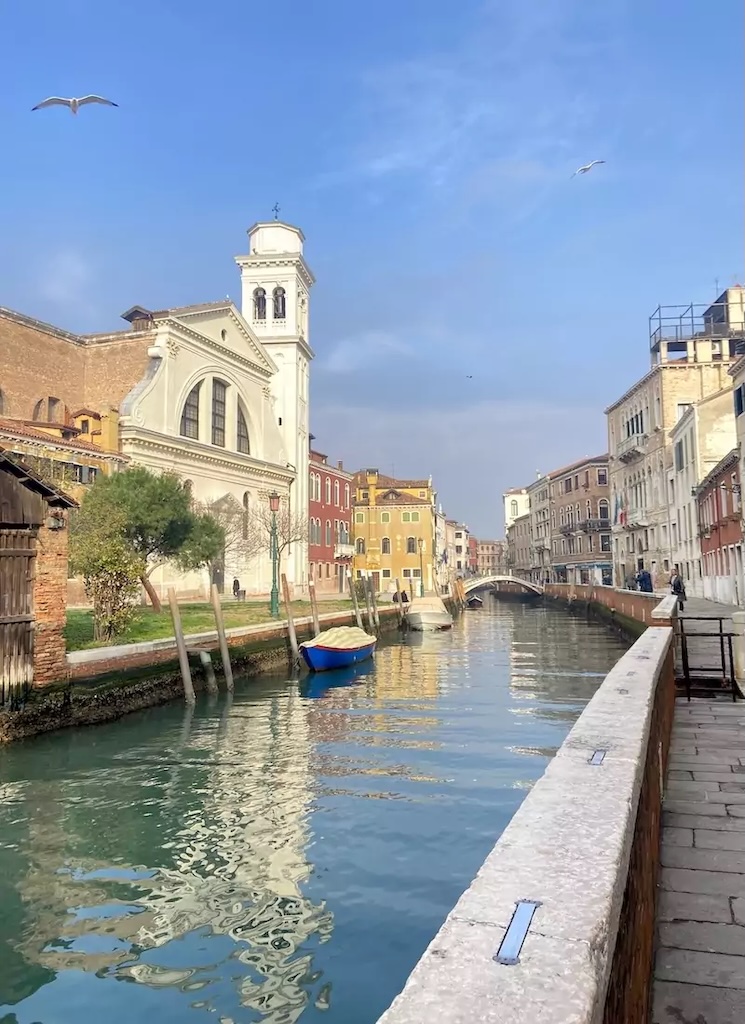
Venice is so much more than St. Mark’s Square and its iconic landmarks.
Yes, those places are breathtaking.
And they’re part of what makes Venice so magical, at any time of day.
But the real connection happens when you start wandering.
Getting lost in the streets is what makes you truly fall in love with the city.
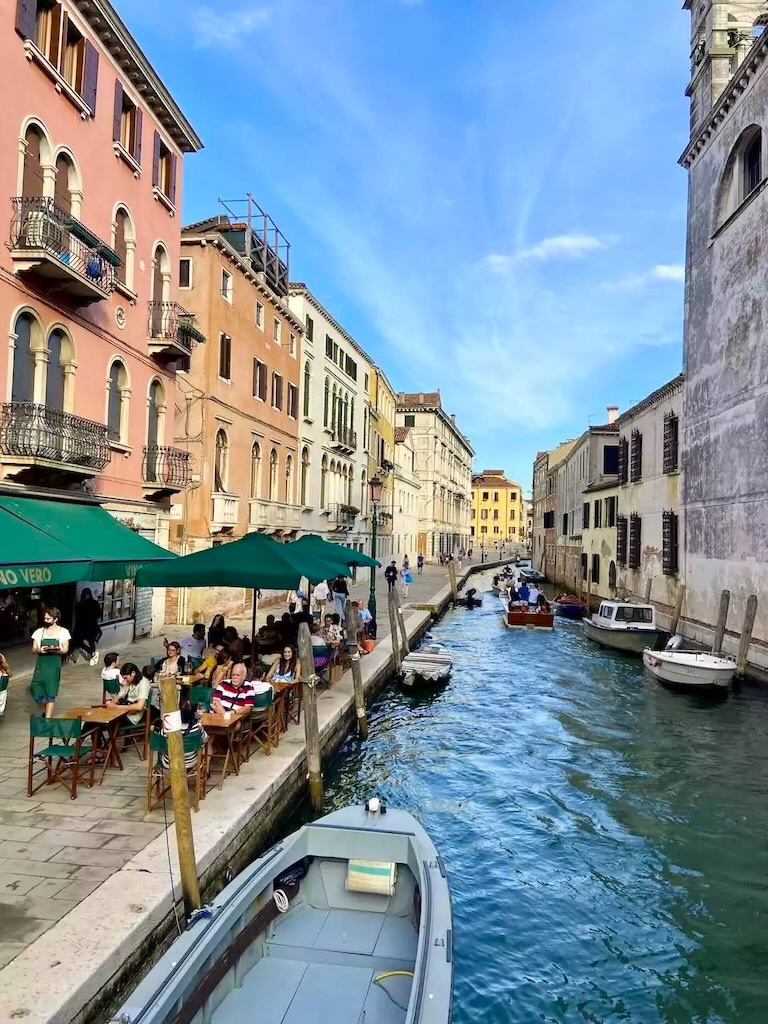
Venice is made up of several neighborhoods, each with its own atmosphere, rhythm, and way of life.
Take the time to explore them, and you’ll quickly realize something important:
Venice is not a museum — it’s a living city, with many different faces.
• Cannaregio (north of the city)
This is where you’ll find a more local, authentic side of Venice.
The atmosphere is lively and welcoming.
There are markets, small shops, and canals lined with simple but charming buildings.
It feels modern, young, and full of life — with plenty of great places to eat and drink.
• Dorsoduro (south of the city)
A quieter, brighter part of Venice.
This is where you slow down.
Walk along sunny waterfronts, stop in small squares, and enjoy a more peaceful side of the city.
It’s one of my favorite areas for long walks — especially on weekends or at sunset.
• Castello (east of the city)
Castello reveals a more raw and authentic side of Venice, away from the crowds.
The streets are wider, the atmosphere more residential,
and you’ll come across more locals than visitors.
This is where you truly get a sense of everyday Venetian life — simple and unfiltered.
🔹 My tip if you don’t want to miss a thing: take a guided tour
This is something I always recommend for a first visit to Venice.
If you can, spend a few hours exploring the city with a professional guide.
It’s one of the best ways to really understand what you’re seeing and ask all your questions about the city (both its past and its present).
Venice has many excellent guides, and different types of tours to choose from:
- Small group tours
- Or even private tours for a more personalized experience
Map of the Must-See Spots in Venice
This map includes all the places mentioned in this article.
It will help you visualize where everything is and make it easier to plan your visits and get around the city.
_______
And that’s it!
With this list, you’ll be sure not to miss the best things to do in Venice for a first trip.
If you have any questions about the places or landmarks mentioned here, feel free to ask in the comments.
I’ll be happy to help — and your questions might help other travelers too 🙂
One Last Word: This article is an English adaptation of an original French post published on lauraenvoyage.fr
It is the result of many hours of work. If you found it useful, you can support my work by using the booking links included in this article. Some of them are affiliate links, which means I may earn a small commission — at no extra cost to you. This helps me continue creating 100% independent and free content. Thank you so much for your support ♥︎