Pompeii is one of those archaeological sites everyone should visit at least once in their life.
You don’t need to be a history buff. You don’t need any special knowledge either.
A visit to Pompeii always leaves an impression. It’s powerful, moving, and sometimes a little unsettling.
The site is also huge, which raises a lot of questions when you start planning your visit.
How long does it take? What should you really see? How do you avoid feeling overwhelmed?
In this article, I’ll walk you through everything you need to know to plan your visit properly.
How much time to allow, practical tips, suggested routes, opening hours, ticket prices, must-see places and monuments…
You’ll have all the keys to enjoy Pompeii at its best and truly experience this extraordinary site.
And at the end of the article, I’ll also share a small selection of things to do around Pompeii, if you want to extend the experience 🙂
Table of Contents
How to Visit Pompeii the Right Way?
Everyone has heard of Pompeii at least once. The famous ancient city buried after the eruption of Mount Vesuvius in 79 AD.
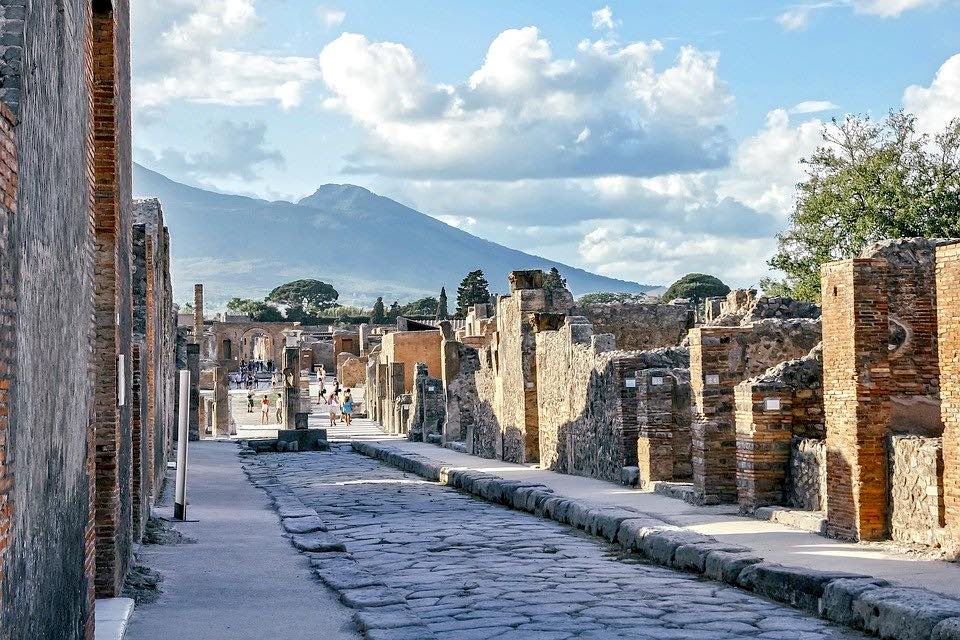
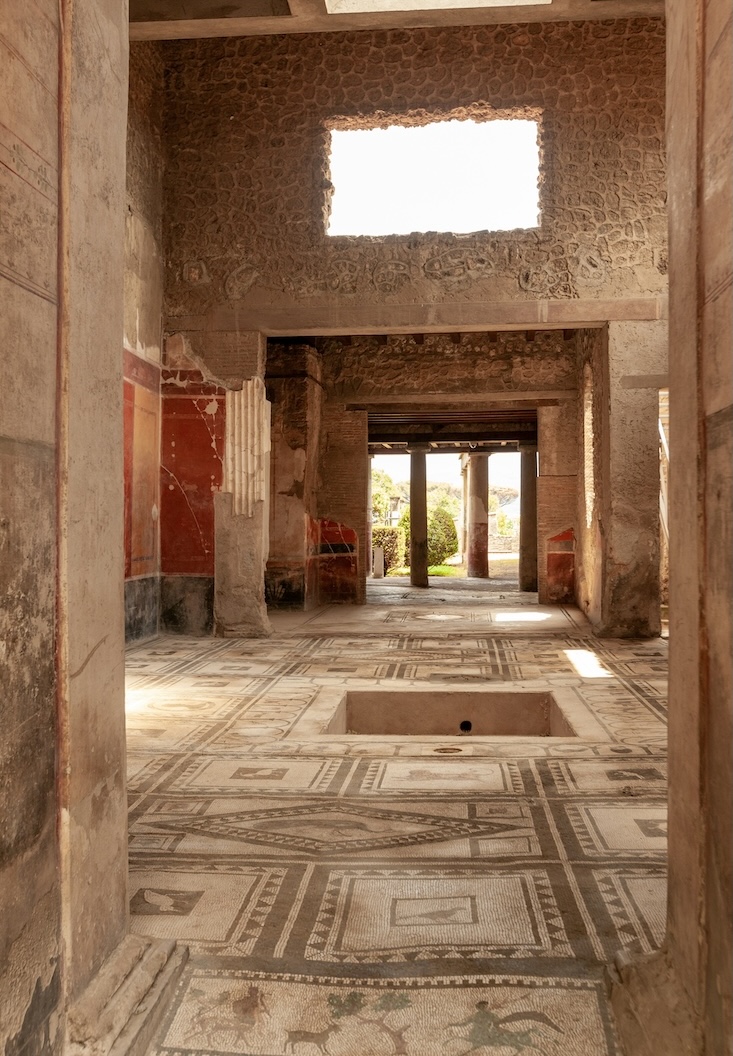
Today, the city is astonishingly well preserved. And it pulls you into its story and into a daily life that disappeared nearly 2,000 years ago. Streets, houses, shops, baths, theaters, the forum…
Everything is still there. Almost exactly as it was back then.
That’s the real miracle of Pompeii.
That said, to truly enjoy your visit, it helps to have a bit of context.
There are no explanatory panels on the site, which can sometimes make it hard to understand what you’re looking at.
To visit Pompeii in the best possible conditions, I recommend one of the following options:
- Rent an audio guide at the entrance of the site (for an additional fee).
- Use the official excavation guide, available in English for free on the official website or on site.
- Buy a travel guide in advance, useful to understand the basics of Pompeii’s history and the latest discoveries.
- Choose a guided tour, which is often the most immersive option. I’ll go over the different possibilities a bit further down.
How Much Time Do You Need to Visit Pompeii?
Ideally, I recommend spending a full day on the site.
And trust me, it’s really not too much. This isn’t just a monument. It’s an entire city waiting to be explored 🙂
If your schedule is tight and you can’t spend a full day in Pompeii — or if you know you’ll start losing focus after a few hours — then planning ahead is key.
Choose the monuments you really want to see in advance.
With a clear route in mind, you’ll make the most of your time on site.
Of course, a full day mainly applies if you’re visiting on your own. For example, with the official guide, an audio guide, or a travel book.
If you choose a guided tour instead (I’ll go over the different options a bit further down), visit times are much shorter.
Most guided tours last between 2 and 3 hours.
What Are the Opening Hours of the Pompeii Archaeological Site?
The year is divided into two different opening periods:
- From April 1 to October 31:
The site opens at 9:00 am and closes at 7:00 pm.
Last entry is at 5:30 pm. - From November 1 to March 31:
The site opens at 9:00 am and closes at 5:00 pm.
Last entry is at 3:30 pm.
⚠️ Good to know:
The archaeological site is closed on January 1, May 1, and December 25.
When Is the Best Time to Visit Pompeii?
Without hesitation, spring and fall are the best seasons to visit Pompeii in good conditions.
March and April are still relatively quiet, except during school holidays.
May already starts to get busier, especially toward the end of the month.
September and October are also great alternatives when it comes to crowd levels.
Just keep in mind that September can still be very hot.
In any case, it’s best to avoid the hottest months — June, July, and August.
They really don’t offer the most pleasant conditions. There is very little shade on the archaeological site.
Temperatures in Campania can easily reach 104°F (40°C) in the sun during summer.
And of course, July and August also come with heavy crowds, which doesn’t help.
How Long Is the Wait at the Entrance of Pompeii?
Pompeii is one of the most famous and most visited archaeological sites in the world.
So yes, it’s only logical to expect… crowds.
There are clearly peak days and peak times when both the entrances and the site itself are extremely busy.
This is especially true:
- On weekends and public holidays
- On the first Sunday of the month
Major tourist sites in Italy are free on the first Sunday of each month, which attracts a huge number of visitors.
Honestly, this is a day I would avoid in high season.
With that many people, it becomes hard to truly enjoy the site — and you end up seeing very little. - During school holidays and summer vacation
During these busy periods, lines at the entrance can get long very quickly.
Crowds are usually at their peak from opening time until late morning.
On the busiest days, waiting times can sometimes reach up to one hour before getting in.
To limit the wait, I recommend arriving before opening time and lining up early, so you can enter among the first visitors of the day.
Another option, if you’re planning to spend only half a day at Pompeii, is to arrive early in the afternoon.
Waiting times are usually much shorter then.
Ticket Prices and Special Rates
- Adult ticket: between €21 and €26, depending on the ticket option you choose (see details below).
Audio guide not included. - Children (under 18): free
- Young visitors (ages 18 to 25 inclusive): special €3 ticket
☞ Tickets are sold in euros. Prices may vary slightly depending on the exchange rate.
Pompeii Tickets Explained
There are currently two main types of tickets to visit Pompeii:
- Pompeii Express ticket
This ticket gives access to the ancient city itself, inside the archaeological site. - Pompeii Plus ticket
This ticket includes access to the ancient city and to several additional sites:- the Villa of the Mysteries
- the Villa of Diomedes
- the Villa Regina, located in Boscoreale
Where to Buy Tickets
Pompeii tickets are available on many different platforms. Personally, my go-to choice for several years has been GetYourGuide. It’s where I buy most of my tickets.
What I really like is their cancellation and refund policy.
In most cases, you can cancel your tickets up to 24 hours before the activity and get a full refund.
After everything we’ve experienced in recent years, flexible cancellation has become a real deciding factor for me.
Even for activities that aren’t especially expensive.
On this platform, you can book both ticket options:
- Pompeii Express
- Pompeii Plus
You can also add an audio guide if you’d like (available in several languages).
⟶ View available tickets for Pompeii ⟵
☞ Good to know:
Free tickets for children under 18 and reduced-price tickets for visitors aged 18–25 are not sold online.
You’ll need to buy these directly at the ticket office on site and present valid ID for age verification.
⚠️ Important:
Depending on the type of ticket you purchase, you may need to enter the site through a specific entrance.
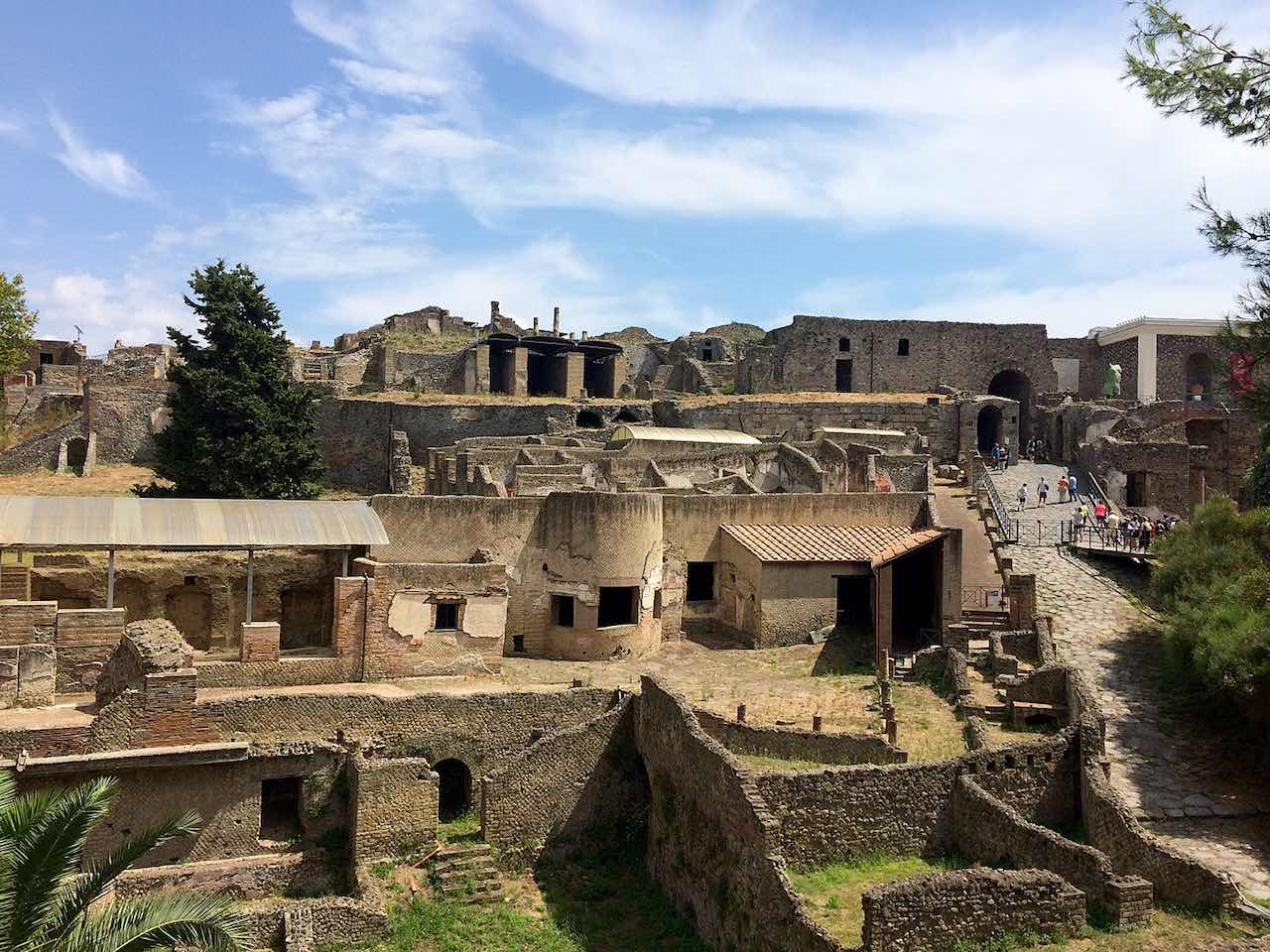
There are currently three main entrances to the archaeological site:
- Porta Marina
- Piazza Anfiteatro
- Piazza Esedra
Make sure to carefully read the information attached to your tickets before your visit.
Guided Tours of Pompeii
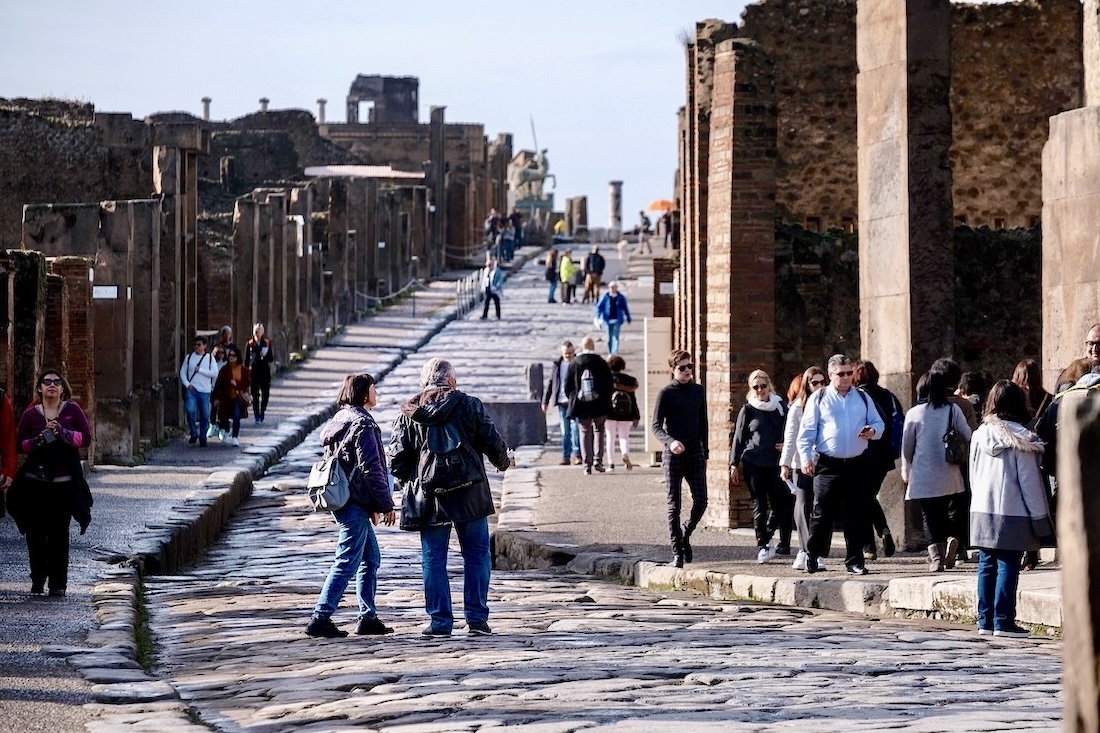
If you want to explore Pompeii with a professional guide, guided tours are a great option.
They’re often faster than visiting on your own and work especially well if:
- you’re short on time
- you’re visiting with children
- you want clear explanations and memorable anecdotes about the site
Guided tours are particularly recommended if you don’t want to spend a full day on site, if the sheer size of Pompeii feels a bit overwhelming, or if you’re worried about getting tired of ancient ruins after a few hours.
The big advantage here is the “best of” itinerary. You won’t miss the highlights, and everything is put into context.
This is the option I recommend if you’re not used to archaeological sites, or if you want to gently introduce your kids or teenagers to ancient history.
• Group Tours
In a small group, you can explore Pompeii with a professional guide during a 2-hour tour.
These visits are educational, engaging, and suitable for all ages, adults and children alike.
The tour usually includes skip-the-line entrance to the site.
And if you wish, you can stay inside Pompeii after the tour ends and continue exploring areas mentioned by the guide at your own pace.
⟶ View available group tours ⟵
• Private Tours of Pompeii
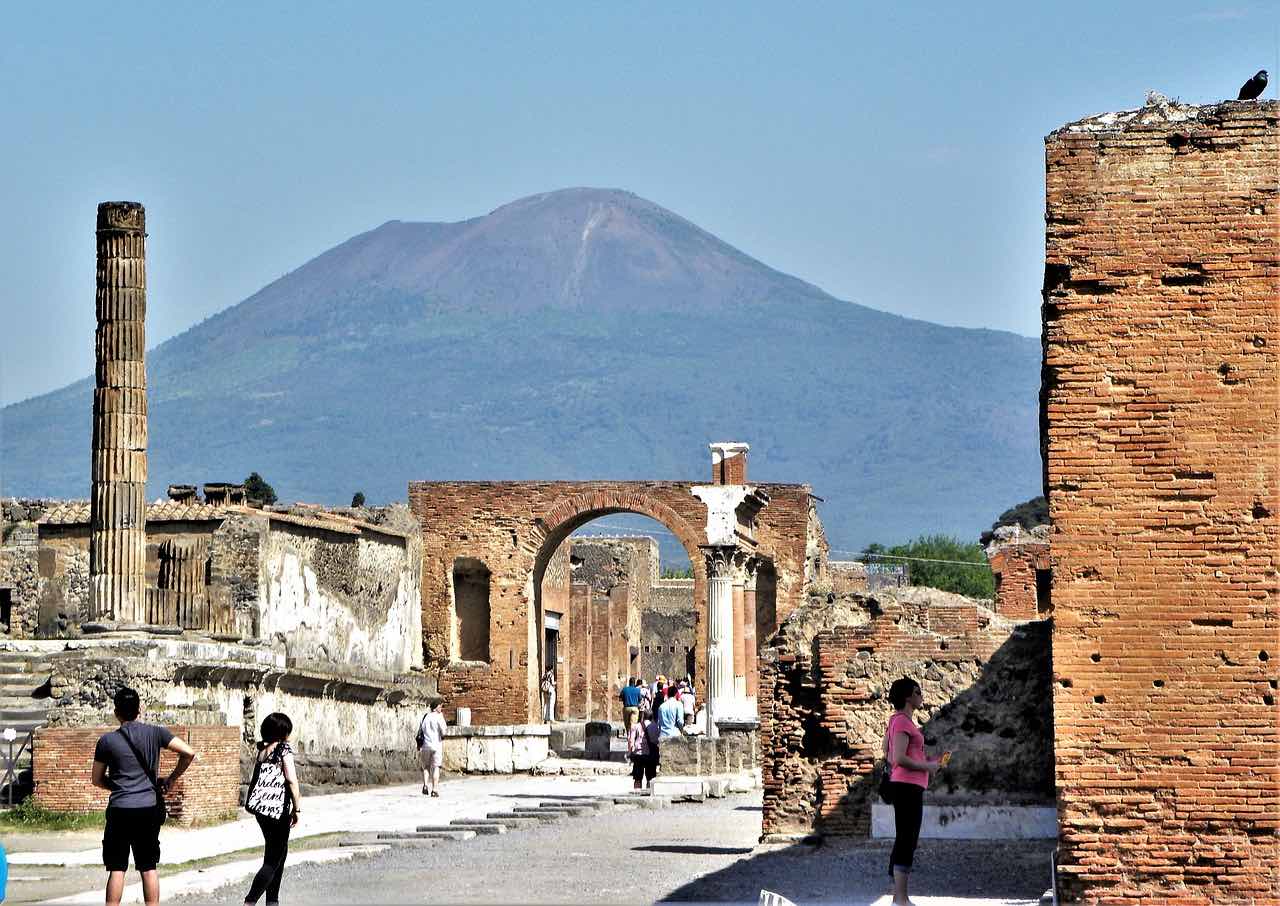
The ultimate experience — if your budget allows it.
You can book a private guide and enjoy a fully personalized visit of the ruins, usually lasting around 3 hours.
It’s perfect for history lovers, curious travelers, or simply anyone who wants a truly memorable experience.
Private tours are also a great option for families.
The price is set per group, which means the more people you are, the better the value.
⟶ View available private tours ⟵
What Should You Bring When Visiting Pompeii?
No matter how long you plan to stay on the site, a few practical details will make a huge difference in how much you enjoy your visit.
• Wear Proper Shoes
It’s hard to grasp the sheer size of Pompeii before you’re actually there.
But trust me — you’ll walk a lot.
Good shoes are absolutely essential.
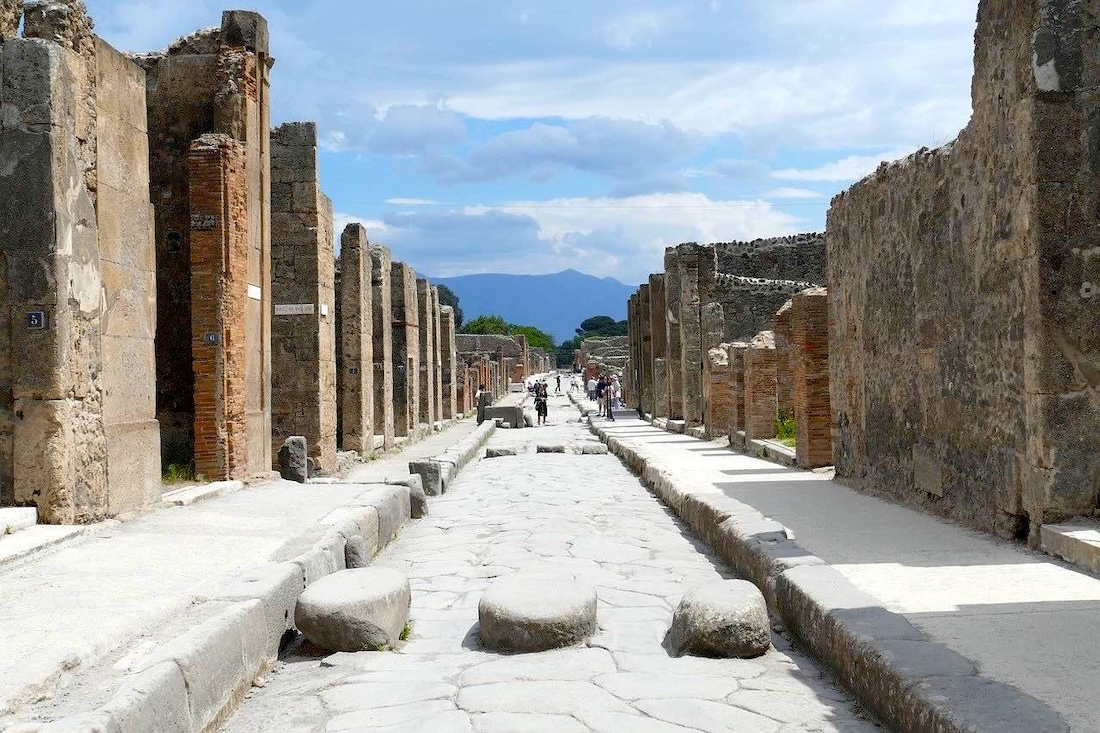
I strongly recommend hiking shoes, as many of the ancient paved streets are uneven, and it’s easy to twist an ankle.
When it rains, the stones can also become very slippery, which makes good grip even more important.
A solid pair of sneakers can work too, although they usually offer less traction than hiking shoes.
Avoid all other types of footwear. That includes flip-flops, slides, sandals, espadrilles, heels… you get the idea.
• Food and Water Inside Pompeii
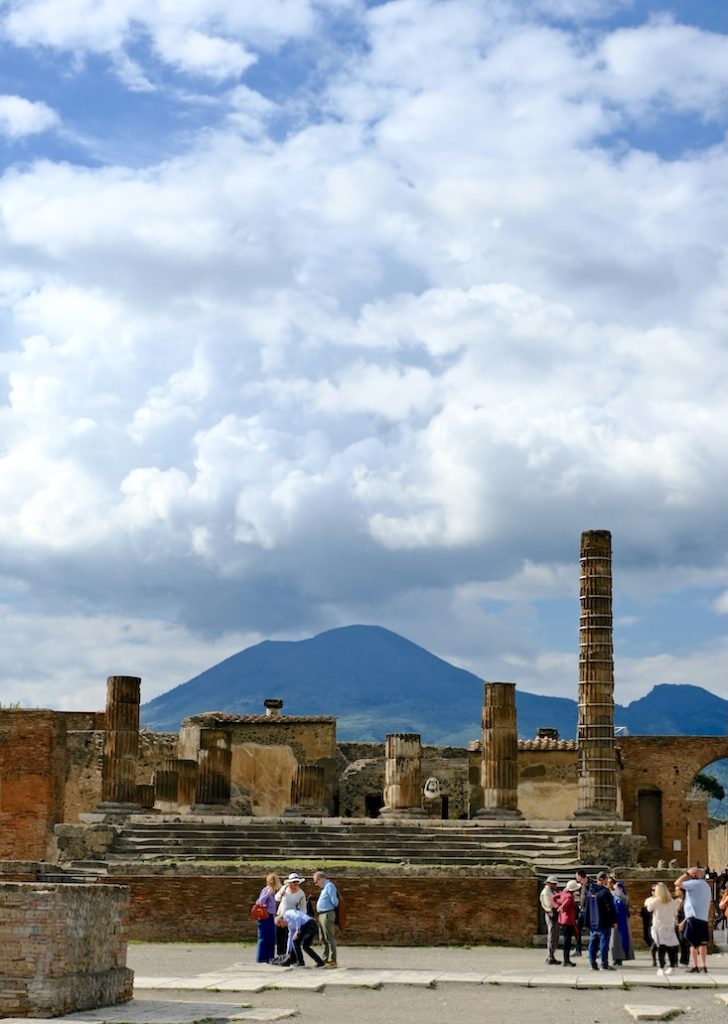
You’ll find a few options to eat inside the site.
There are two cafés and one restaurant, offering quick meals and hot food — perfect for a break. There are also several picnic areas if you prefer to bring your own lunch.
Don’t forget to bring enough water.
It can get very hot in Campania, and shade is limited on an archaeological site like this. You can refill or buy water at cafés and restaurants, near the restrooms, or at the drinking fountains scattered throughout the site.
• Protect Yourself From the Sun
From April on, temperatures can rise quickly in Campania. And the sun can be unforgiving, especially if you have sensitive skin. Since shade is scarce, make sure to bring: a hat or cap & sunscreen.
• Avoid Large Backpacks
Like many major tourist sites, Pompeii does not allow large backpacks inside. Bags larger than 30 × 30 × 15 cm must be left at the luggage storage area before entering.
A Suggested Itinerary for Visiting the Archaeological Site
If the sheer size of the site feels intimidating and you’re not quite sure how to approach it, here’s an example of a fairly complete itinerary, based on my own visit to Pompeii.
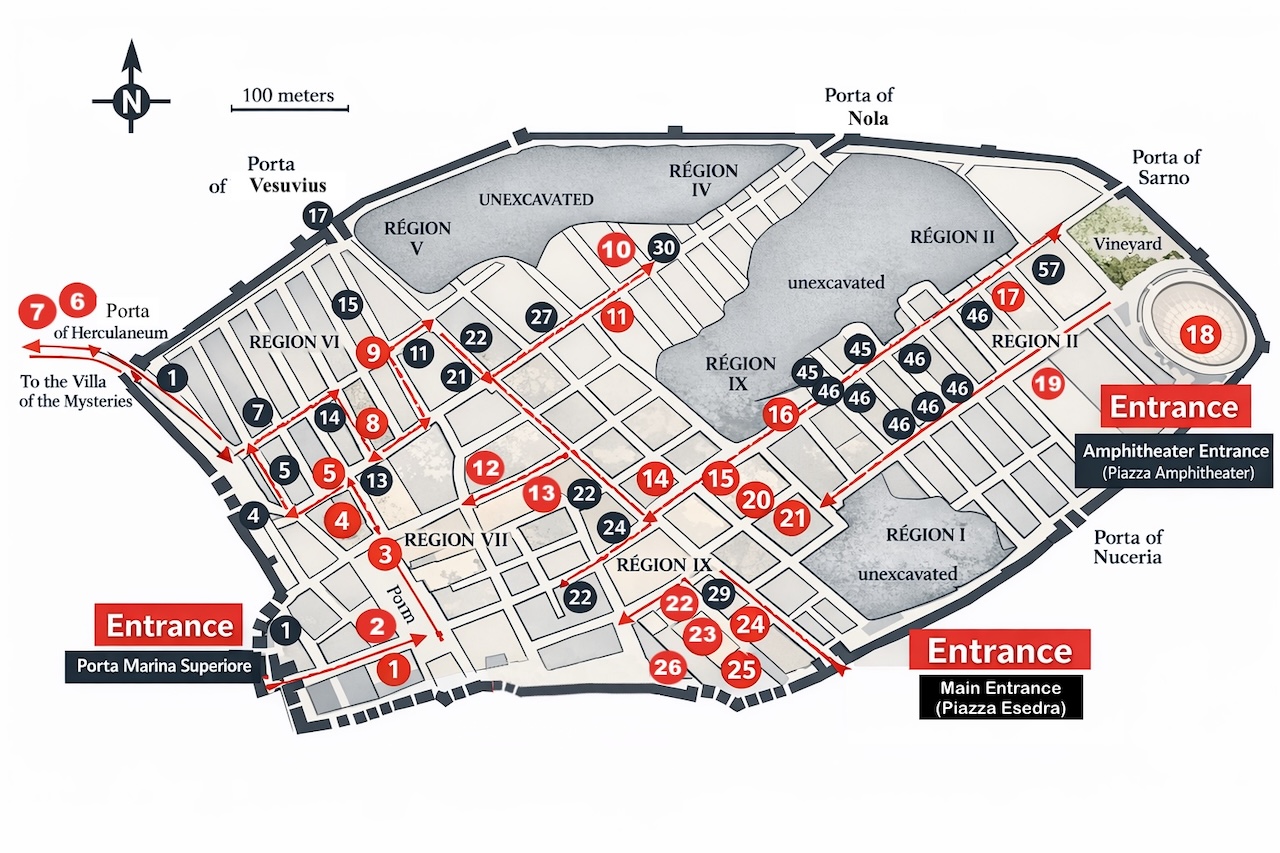
By following this route, you won’t miss any of the site’s most remarkable places.
At a normal pace, this itinerary can easily take a full day.
Of course, if you move at a faster pace and don’t go inside every monument mentioned below, it can also be done in less time.
It’s really up to you to choose the rhythm that suits you best.
On the map, the numbered red dots highlight Pompeii’s most iconic remains — the ones you really shouldn’t miss during your visit.
For more details about these places and monuments, head to the next section 🙂
As mentioned earlier, Pompeii has three different entrances:
- Porta Marina Superiore
- Piazza Esedra
- The Amphitheater entrance
Depending on which entrance you use, the itinerary can easily be adjusted.
⚠️ Good to know:
The Pompeii Express ticket gives access to the entire area except points 6 and 7.
The Pompeii Plus ticket gives access to the full site, including points 6 and 7.
What You Shouldn’t Miss When Visiting Pompeii
By following the itinerary suggested above, here’s a selection of some of the most impressive remains in Pompeii, numbered according to their order on the map.
Of course, this list is far from exhaustive. You could easily spend many more hours wandering the site in every direction. Here’s a good overview to get you started:
• The Basilica (1)
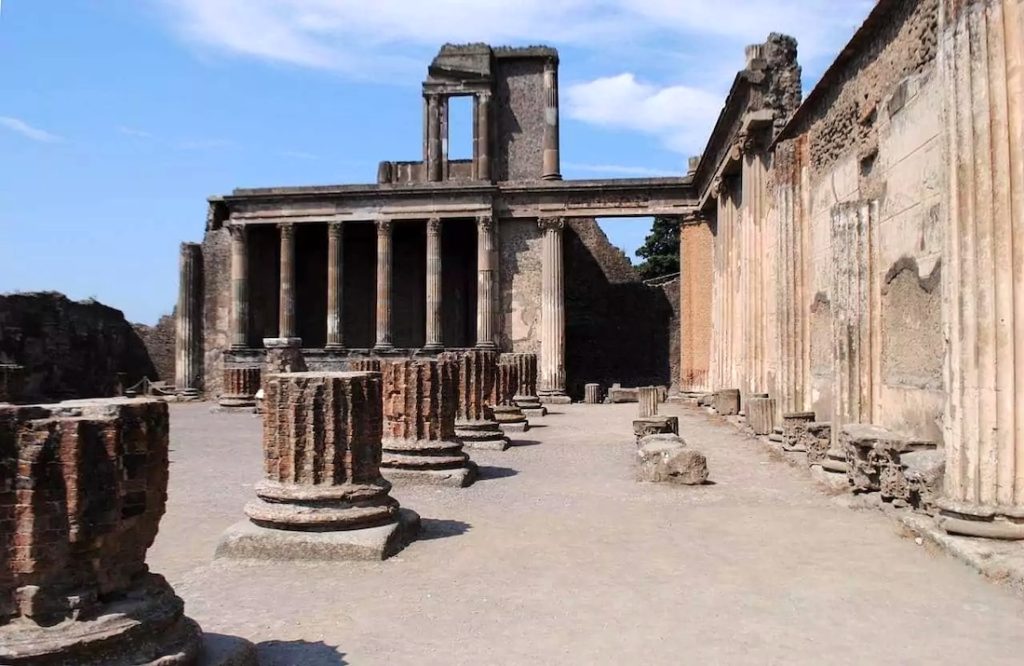
Built in the 2nd century BC, the Basilica was not a religious building at the time.
It was used for activities related to justice and public affairs.
• The Temple of Apollo (2)
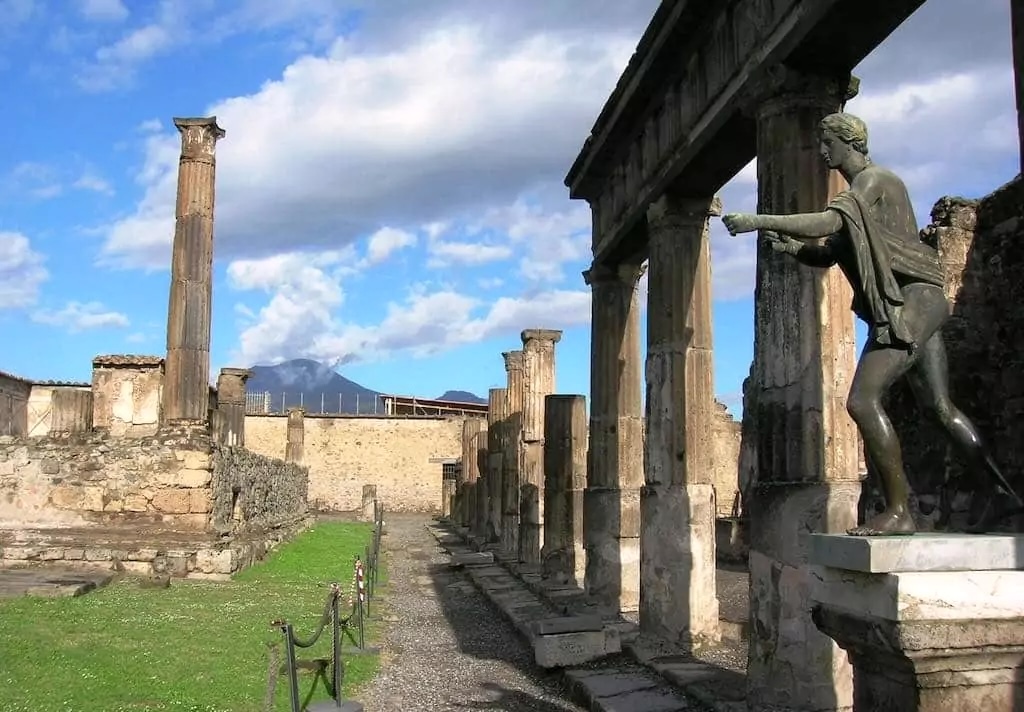
One of the oldest monuments in the city, built between the 3rd and 2nd centuries BC.
It stands right next to the Forum.
• The Forum (3)
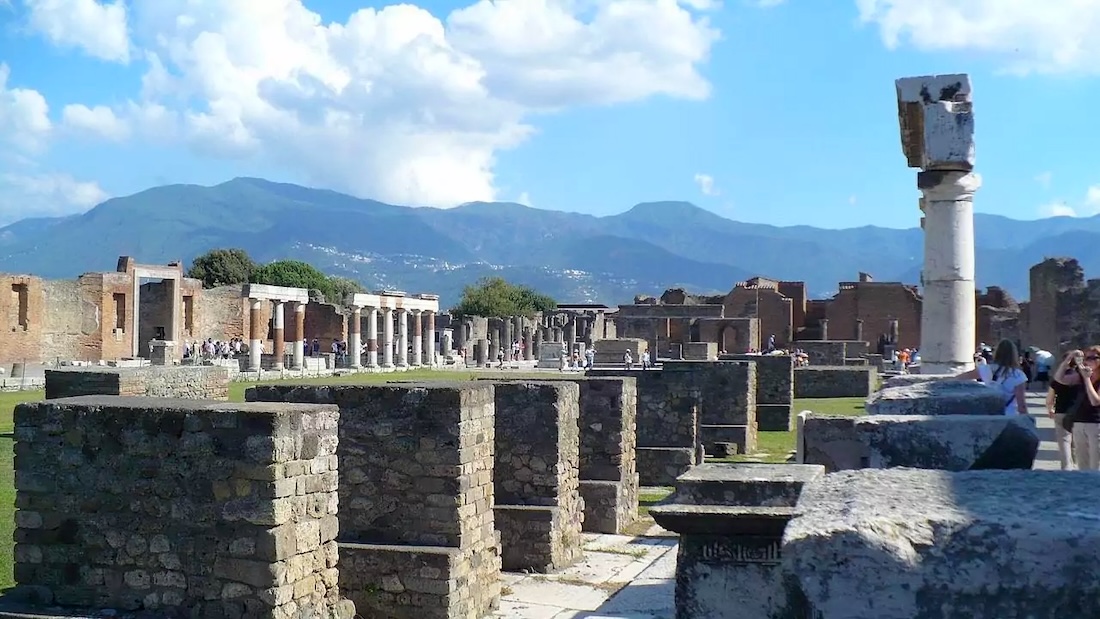
The heart of public life in Pompeii.
From here, people accessed the surrounding administrative, religious, and commercial buildings.
At the northern end, you can still see the remains of a temple dedicated to Jupiter, Juno, and Minerva.
• The Forum Baths (4)
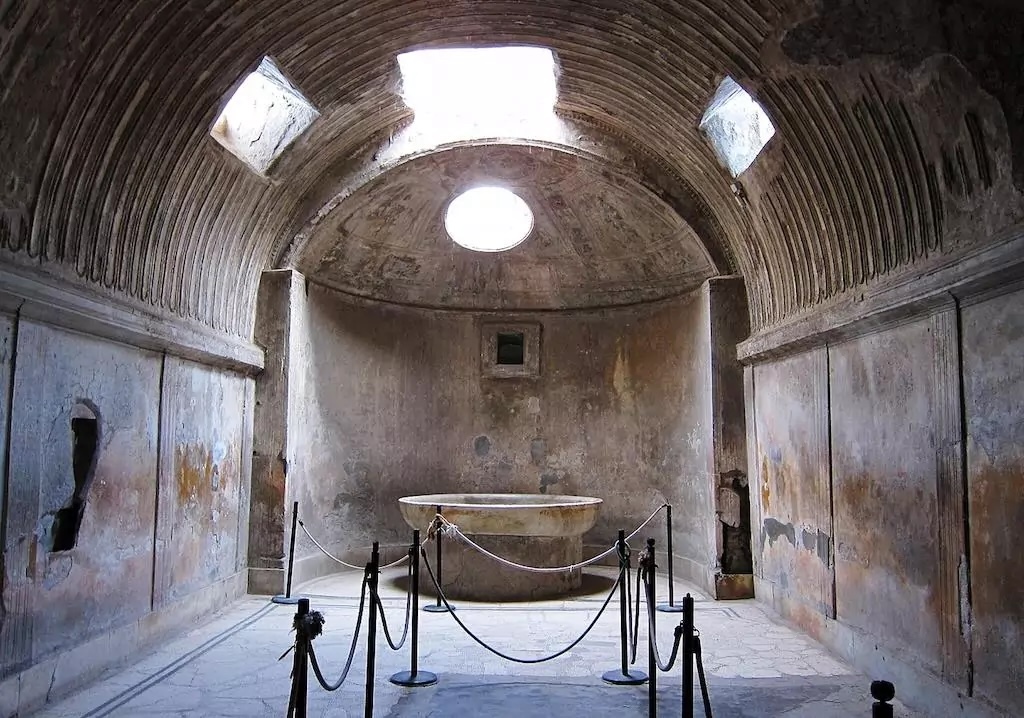
Built in the 1st century BC, these baths are remarkably well preserved.
You can still admire their vaulted ceilings and the different bathing pools.
• The House of the Tragic Poet (5)
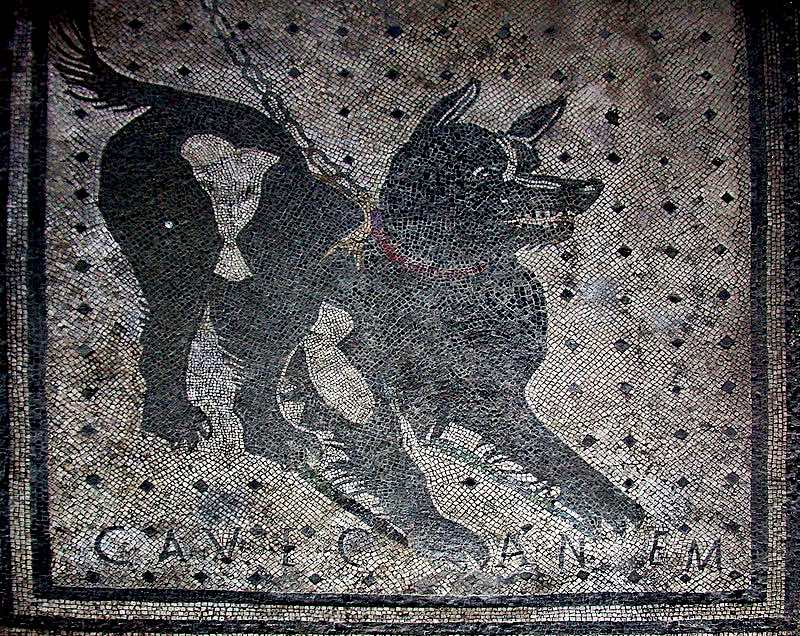
Famous for its iconic entrance mosaic reading “Cave Canem”, which can be translated as “Beware of the dog.”
• The Funerary Area at the Herculaneum Gate (6)
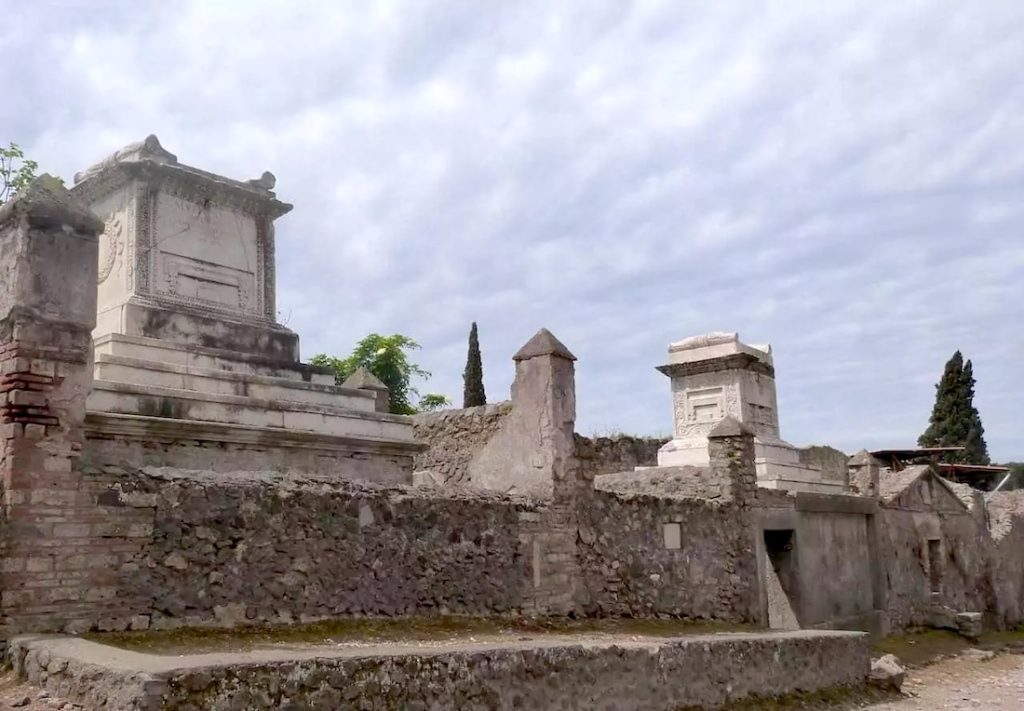
In ancient times, cemeteries were traditionally located along the roads leading out of cities.
Here, you can see several well-preserved mausoleums lining the ancient road.
• The Villa of the Mysteries (7)
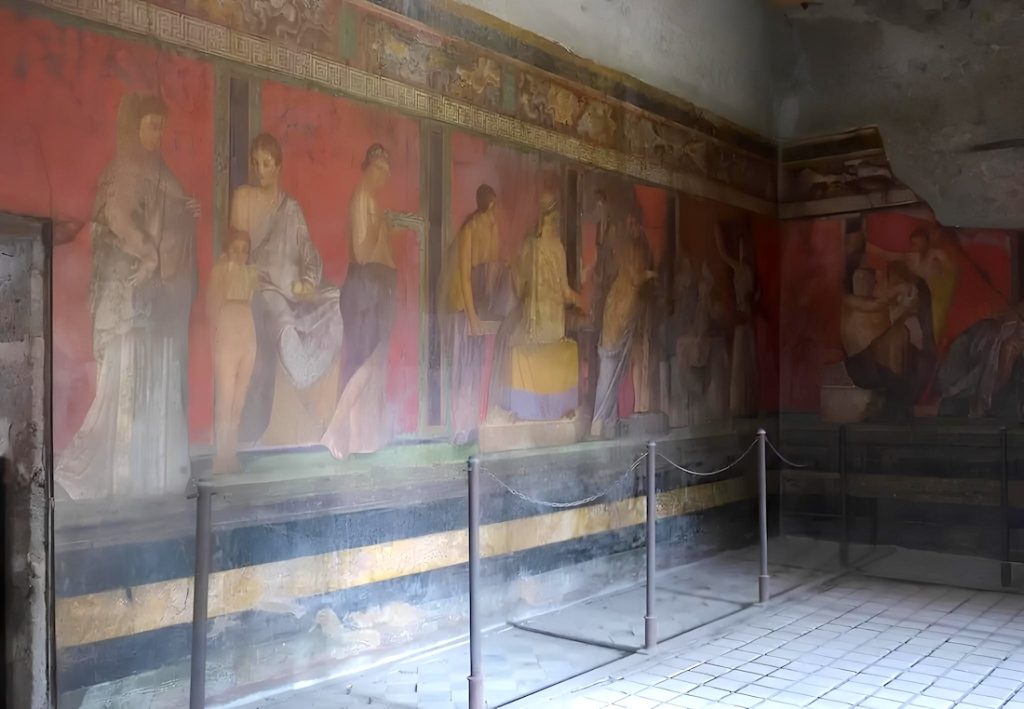
One of the most beautiful residences in Pompeii.
Located outside the city walls, this wealthy villa was built in the 2nd century BC.
Some of its frescoes have survived in an exceptional state of preservation.
• The House of the Faun (8)
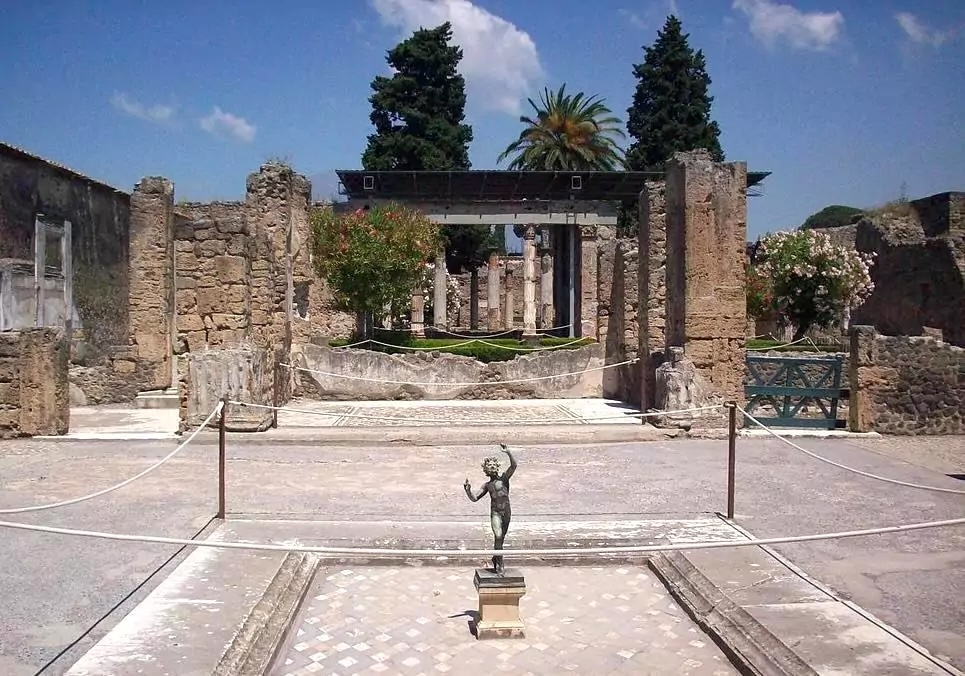
Famous for its massive mosaic depicting Alexander the Great at the Battle of Issus.
This is one of the largest domus in Pompeii — nearly 3,000 m² — and likely belonged to an important local figure.
• The House of the Vettii (9)
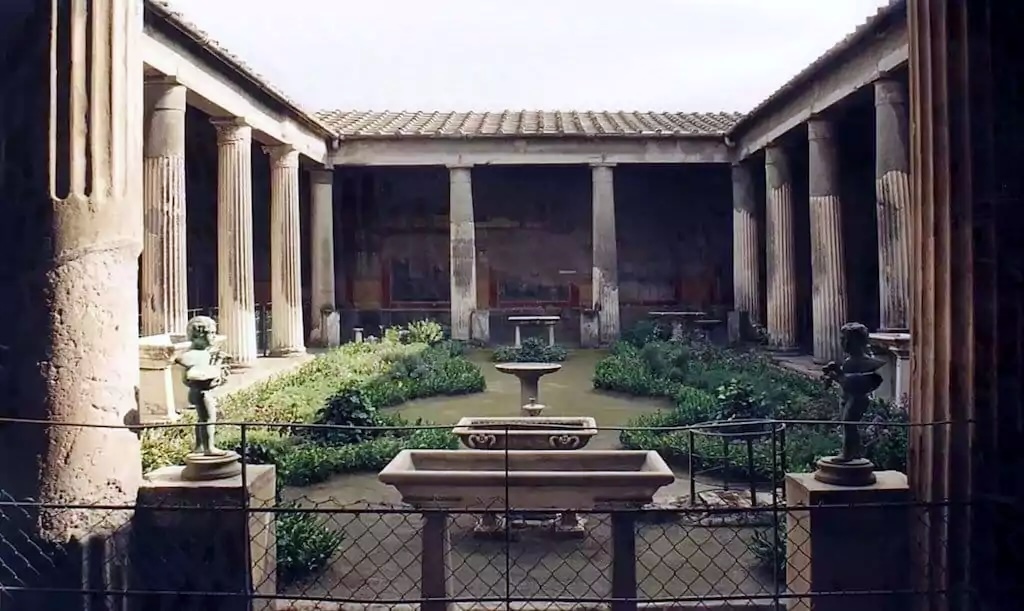
Well known for the many frescoes decorating its walls.
The house belonged to a wealthy couple whose names have come down to us: Aulus Vettius Restitutus and Aulus Vettius Conviva.
• The House of Marcus Lucretius Fronto (10)
• The House of the Centenary (11)
Two beautiful and well-preserved residences once owned by members of Pompeii’s ruling class.
Here, you can admire frescoes and mosaics in rooms that hardly seem to have aged over the past 2,000 years.
• The Bakery of Modestus (12)
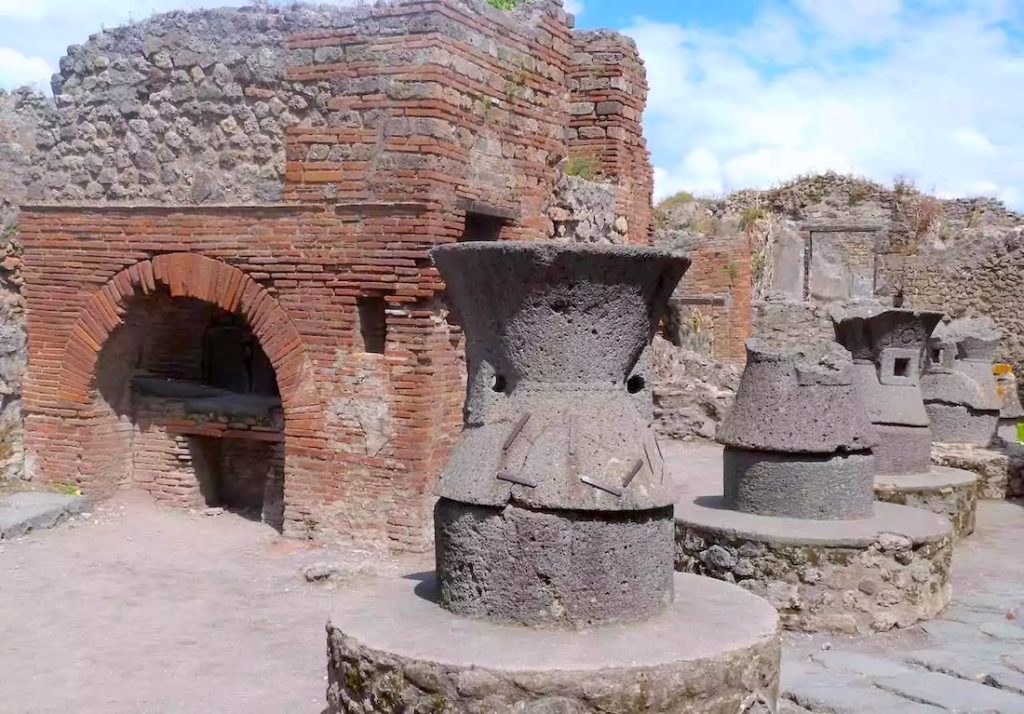
Strikingly realistic, with its ovens and millstones that look almost ready to be used again.
• The Lupanar (13)
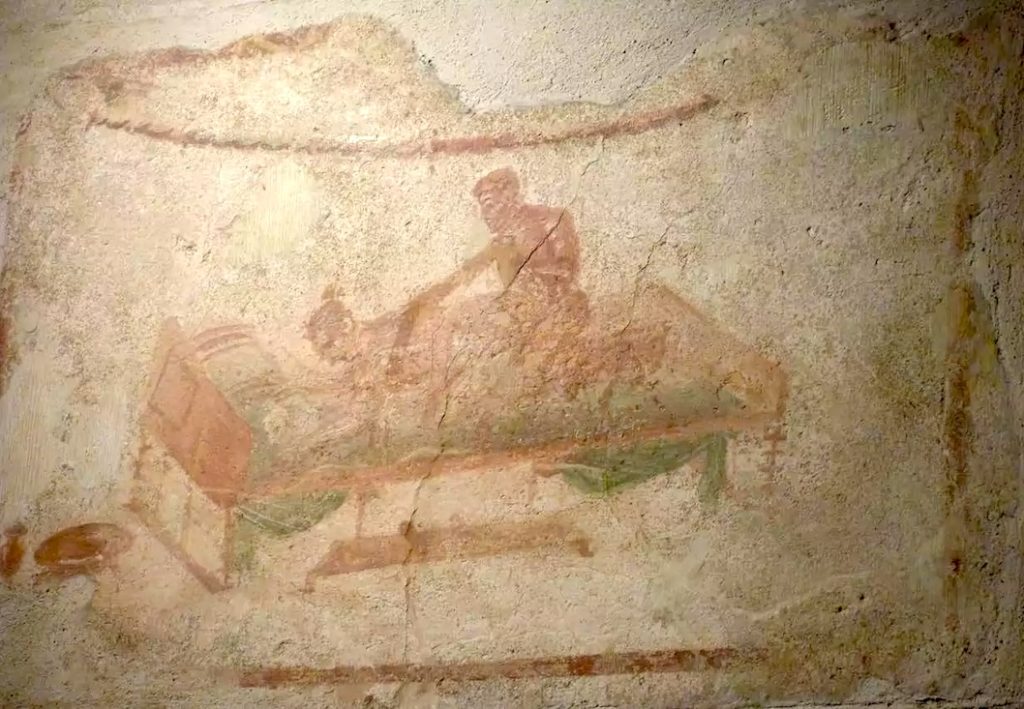
Ancient cities were known to include places dedicated to prostitution, and Pompeii is no exception.
This lupanar is very well preserved.
You can still see the five small rooms used to receive clients, as well as numerous decorations depicting lust and the practices that took place here.
• The Stabian Baths (14)
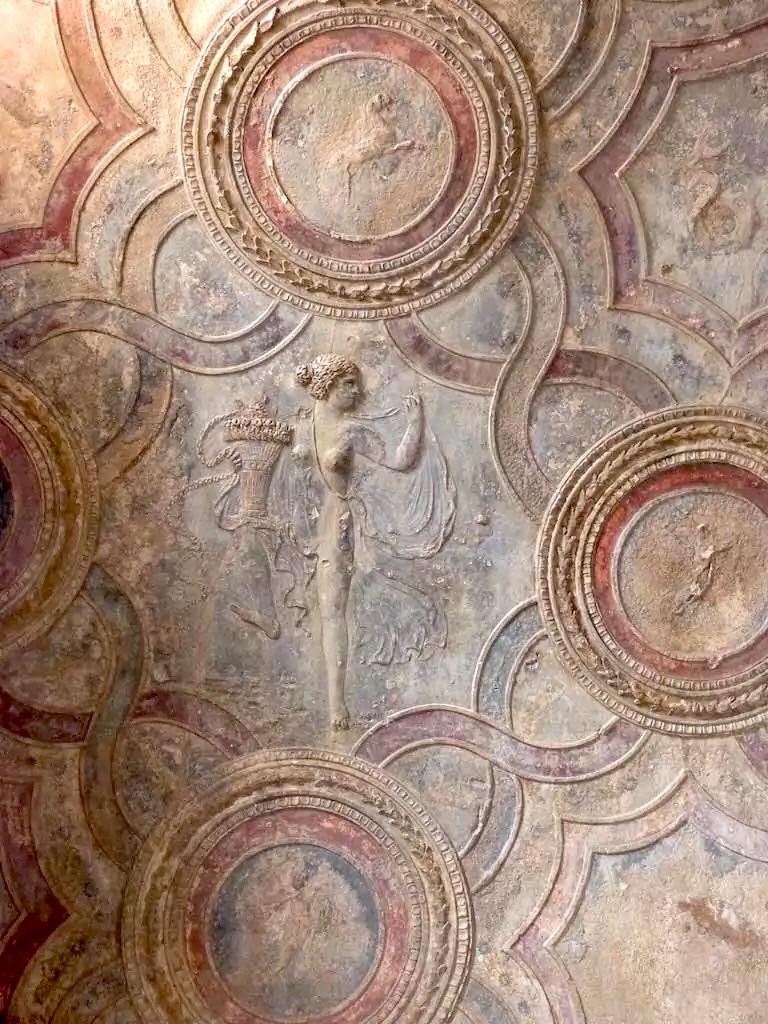
This is probably the place that impressed me the most in Pompeii.
The baths are in an exceptional state of preservation, and even today, you can still appreciate the delicacy and richness of the decorations.
You can clearly see all the facilities that were available to the city’s inhabitants: indoor and outdoor baths, pen-air gym area…
All of it set in an atmosphere of real luxury and grandeur.
• The Fullonica of Stephanus (15)
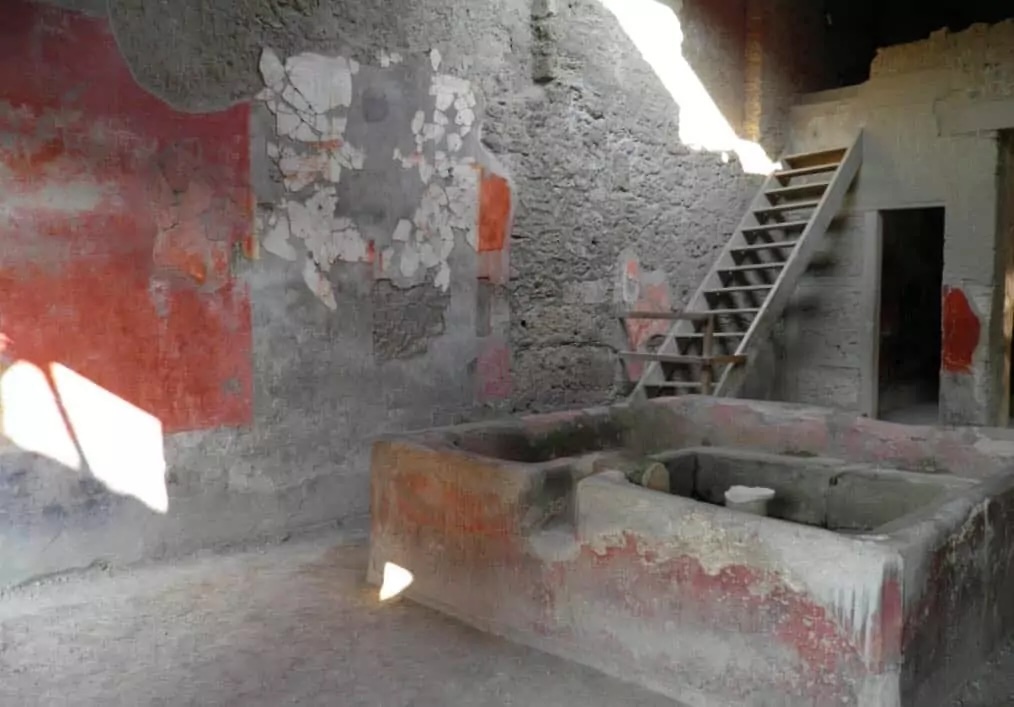
This was the site of an important ancient industry: a fullonica, or textile workshop.
Here, enslaved workers stomped on fabrics in large vats filled with urine, water, and sulfur to clean and whiten them.
• The Thermopolium of Asellina (16)
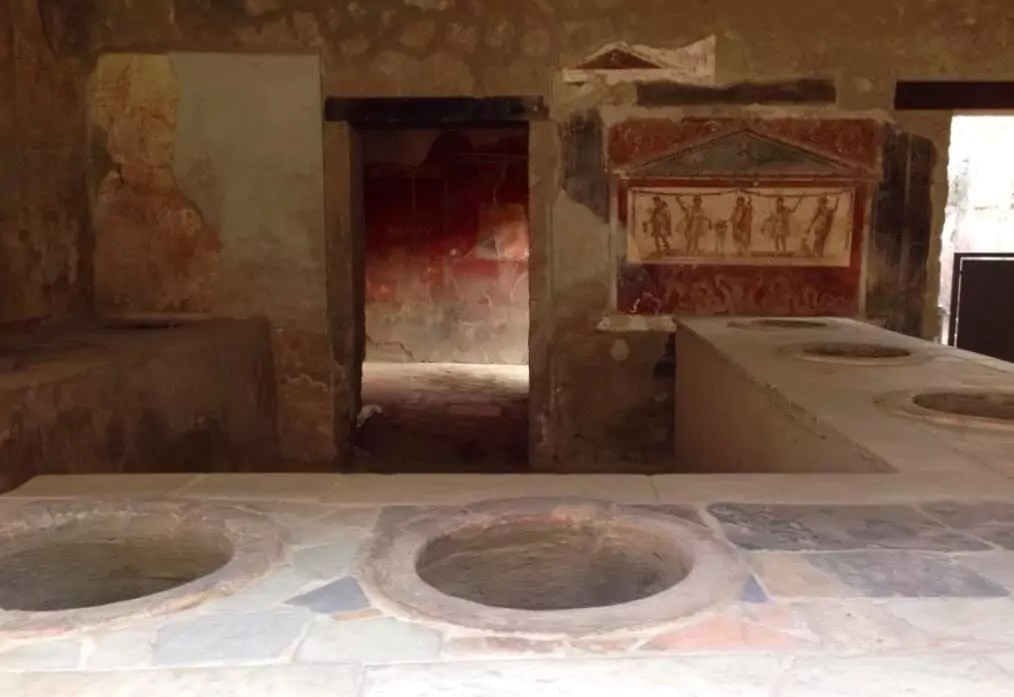
You’ll come across several of these establishments in Pompeii.
Thermopolia were the ancestors of modern fast-food restaurants.
They served hot food to eat on site or to take away, stored in large jars built directly into the counter.
The thermopolium of Asellina is one of the best preserved in Pompeii, with its counter and wall paintings still in remarkably good condition.
• The House of Venus in the Shell (17)
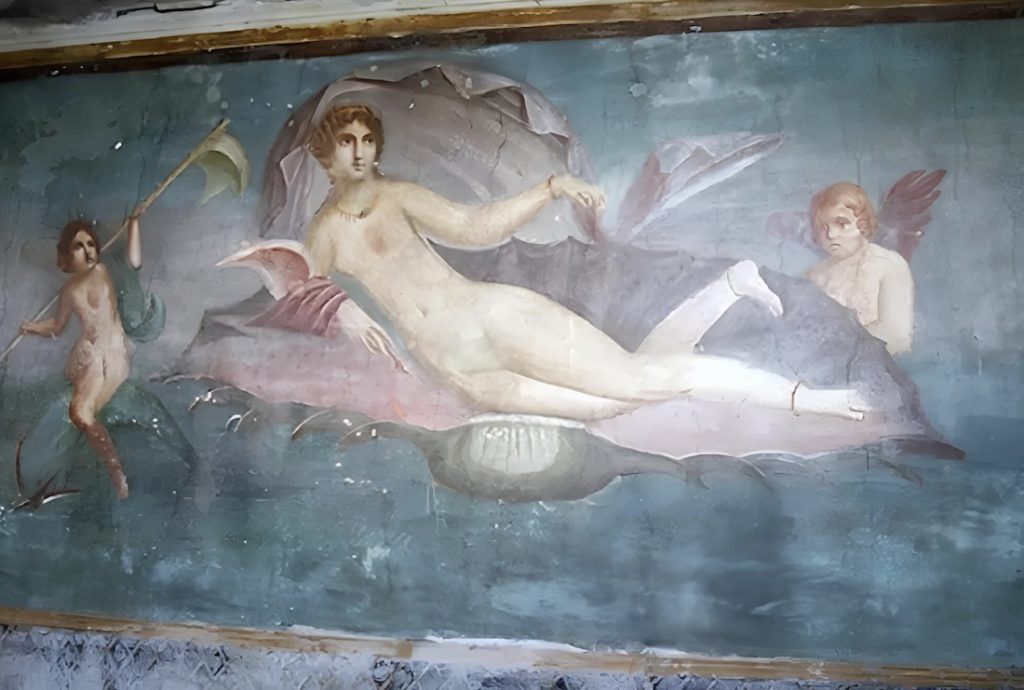
This domus is famous for housing one of Pompeii’s most iconic — and best-preserved — paintings: Venus emerging from a shell.
• The Amphitheater (18)
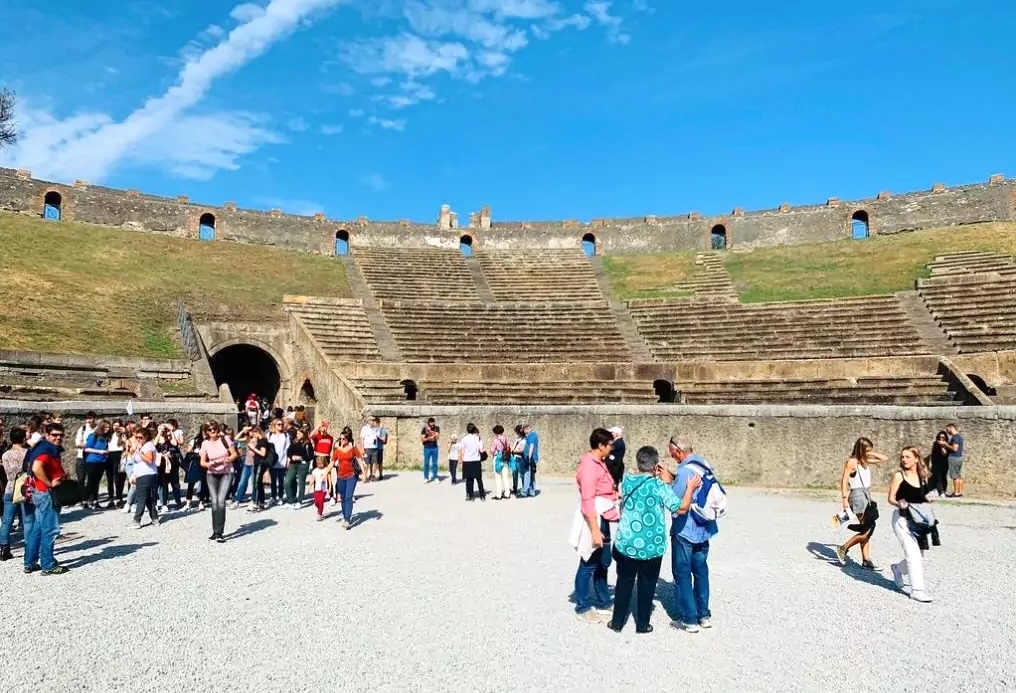
A classic feature of major ancient cities. Built in the 1st century BC, the amphitheater could hold around 12,000 spectators.
It is also one of the oldest Roman amphitheaters still standing today.
• The Large Palaestra (19)
A vast open space dedicated to outdoor sports and physical activities, such as gymnastics and swimming.
It is surrounded by an equally impressive and well-preserved portico.
• The House of Menander (20)
• The House of the Chaste Lovers (21)
Two magnificent domus known for their sumptuous decoration and refined frescoes.
• The Temple of Isis (22)
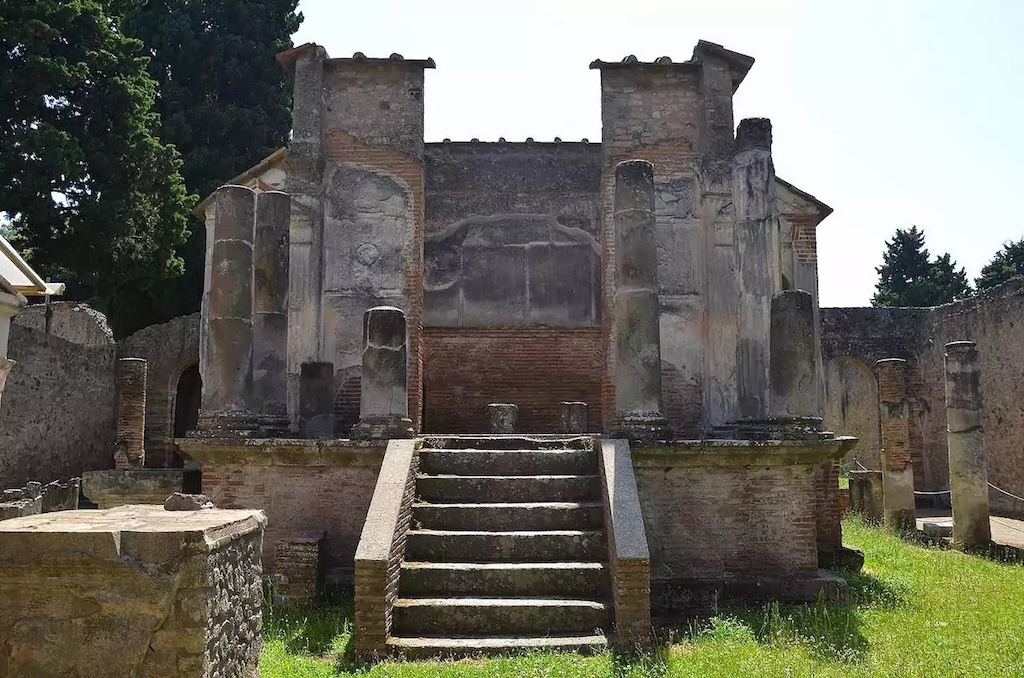
A small but very well-preserved temple dedicated to the Egyptian goddess Isis, later adopted into Roman religion.
• The Large Theatre (23)
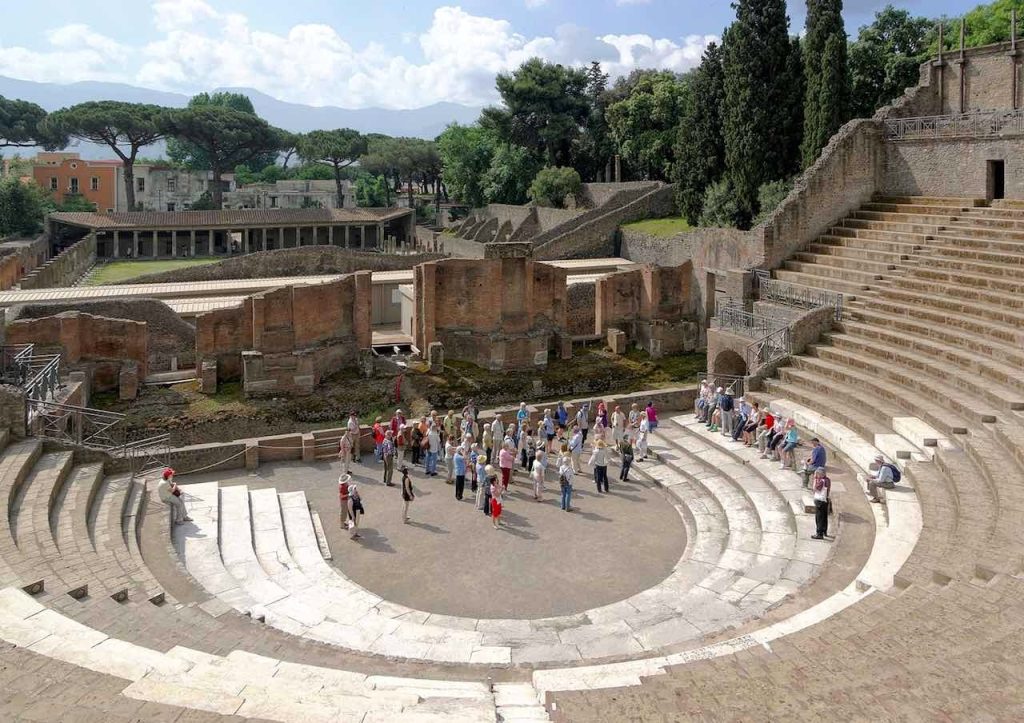
Built in the 2nd century BC, this theater could accommodate up to 5,000 spectators.
• The Small Theatre (Odeon) (24)
More recent than the Large Theatre, this smaller, once-covered building could host around 1,000 spectators.
It was mainly used for musical performances and recitals.
• The Gladiators’ Barracks (25)
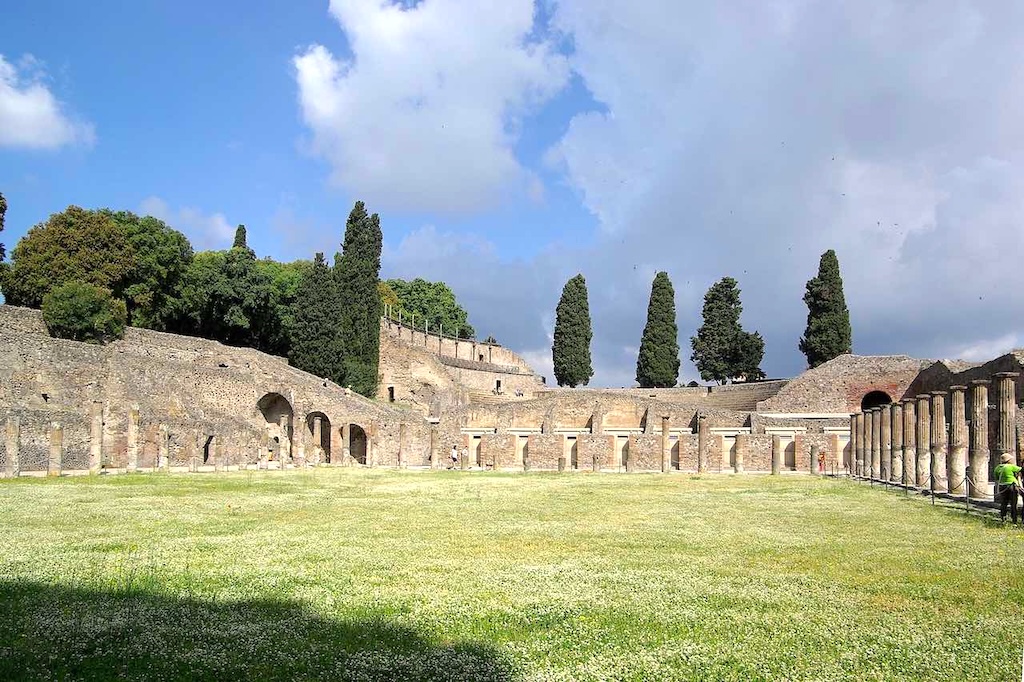
Originally designed as a covered walkway for spectators of the nearby theater, this space was later converted into a gladiators’ barracks.
This transformation happened after an earthquake that struck the city just a few years before the eruption of Mount Vesuvius.
• The Triangular Forum (26)
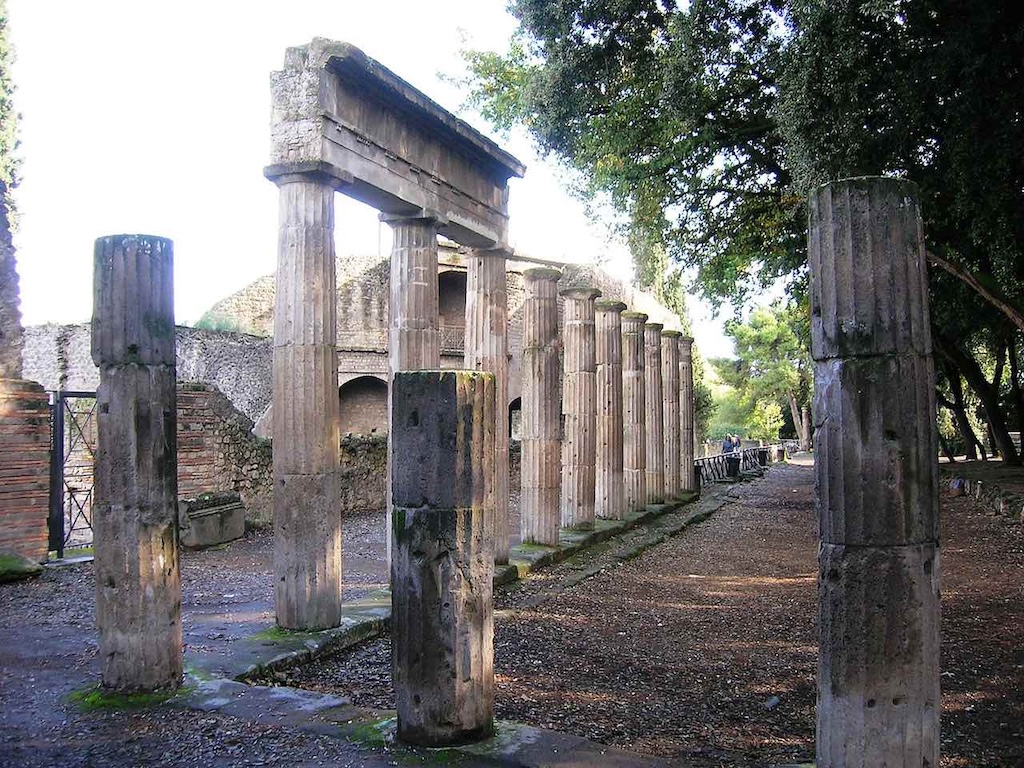
A romantic, shaded place to end your visit on a high note.
This forum once housed a temple at its center, probably dedicated to Minerva and Hercules.
It’s a lovely spot to slow down and take in the atmosphere before leaving the ruins of Pompeii.
Visit Pompeii From Naples
If you’re spending some time in the Naples area, there are organized excursions that take you from Naples to Pompeii.
They usually include a guided visit of the site, making it an easy and enjoyable way to add a touch of ancient history to your stay in the region.
Visit Pompeii From Rome
The same applies if you’re spending time in Rome.
Even though the Italian capital isn’t right next to Pompeii, there are day trips available between Rome and Pompeii.
These excursions usually include free time to explore the archaeological site on your own, making it an easy way to discover Pompeii during a stay in Rome.
Other Things to Do Around Pompeii
The region around Pompeii is packed with things to see and do.
Honestly, the best way to explore it is by planning a road trip and using Naples as a base to explore the surroundings.
If you don’t want to miss the most beautiful sites in the area, you can check out my dedicated article:
☞ 7-Day Road Trip From Naples to Pompeii, Mount Vesuvius, and the Amalfi Coast
Otherwise, here’s a quick selection of must-see places around Pompeii:
• The Incredible Archaeological Site of Herculaneum
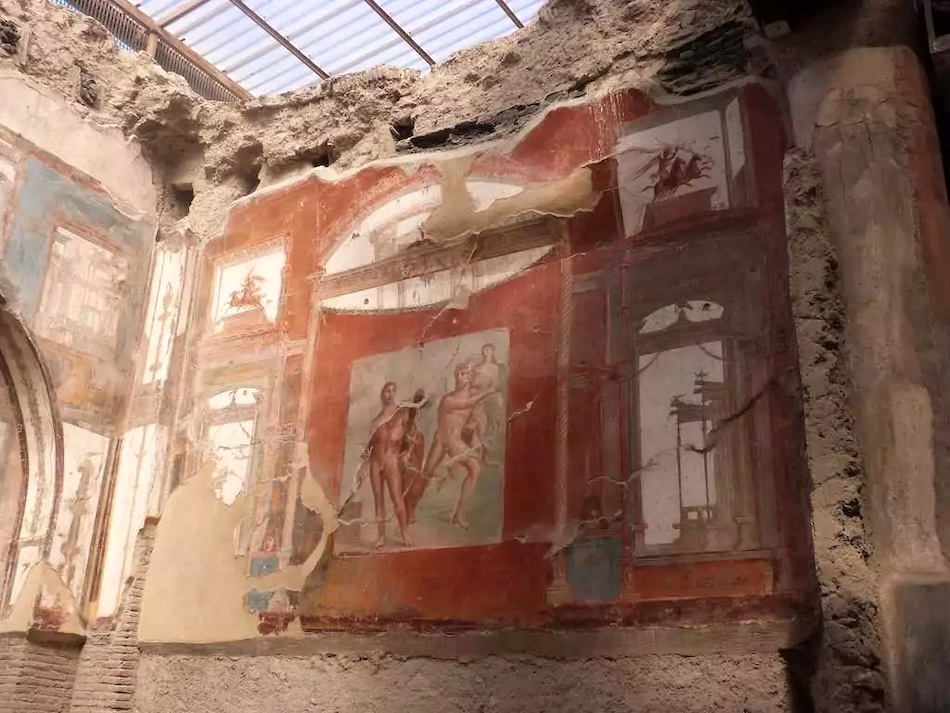
I’ve always wondered why Herculaneum doesn’t enjoy the same level of fame as Pompeii.
Because if you love archaeological sites, there’s no doubt about it — you’ll absolutely love Herculaneum.
It might even be better preserved than Pompeii (yes, it’s possible!). Herculaneum is an amazing extension of the discovery of the Roman world.
Located beneath the modern town of Ercolano, about 9 miles (15 km) from Pompeii, the site can be visited in half a day. It’s especially known for its incredibly well-preserved ancient houses — some of them still have their upper floors intact.
Just like in Pompeii, different types of visits are available at Herculaneum:
☞ Entrance tickets with an audio guide
☞ Guided tours (highly recommended!)
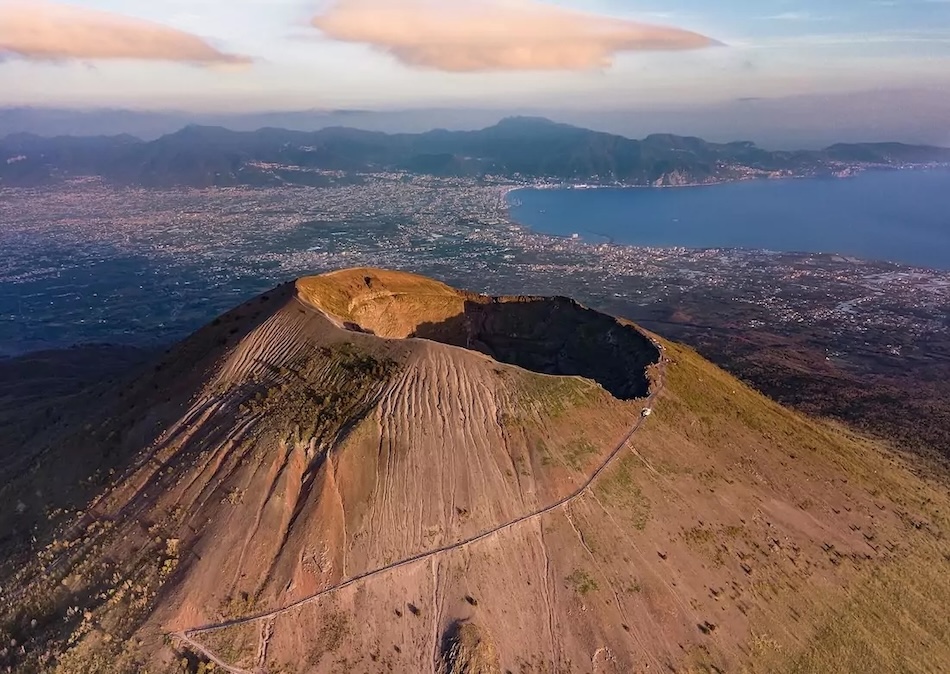
• Mount Vesuvius
Why not treat yourself to a short hike up Mount Vesuvius?
After all, you don’t get to see volcanoes every day!
Just keep in mind that an entrance ticket is required to reach the summit and the crater.
Tickets are sold online here.
• Visit Naples
Because the famous Neapolitan city has plenty of charm of its own.
You can visit the excellent National Archaeological Museum of Naples, explore the city’s vast underground tunnels, or simply enjoy some truly amazing pizza — invented right here in the 16th century.
Hotel Ideas for Staying in Pompeii
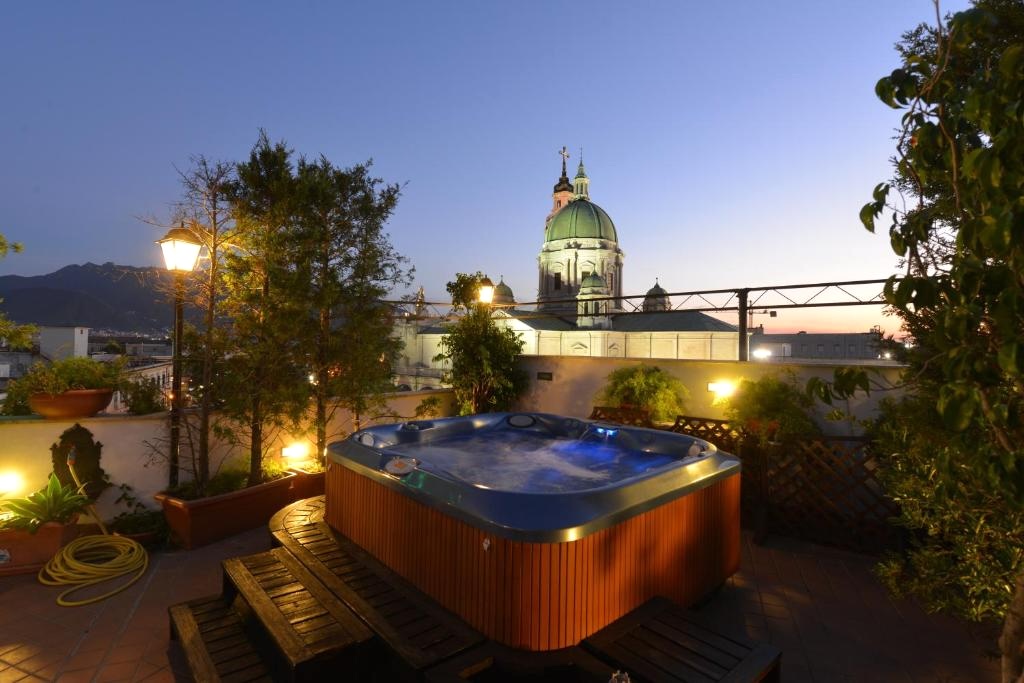
- Hotel Palma (4 stars)
In the heart of Pompeii, a charming hotel with a rooftop terrace and panoramic views of Mount Vesuvius.
- Hotel Forum (4 stars)
A long-time classic in Pompeii. Comfortable, modern, and above all: located right across from the ruins.
- Hotel Vittoria (4 stars)
Also located right across from the ruins, a modern hotel with especially welcoming staff.
And that’s it!
I hope this article helped you find everything you need to easily plan your visit to Pompeii. If you still have questions, feel free to ask them in the comments 🙂
One Last Word: This article is an English adaptation of an original French post published on lauraenvoyage.fr.
It is the result of many hours of work. If you found it useful, you can support my work by using the booking links included in this article. Some of them are affiliate links, which means I may earn a small commission — at no extra cost to you. This helps me continue creating 100% independent and free content. Thank you so much for your support ♥︎