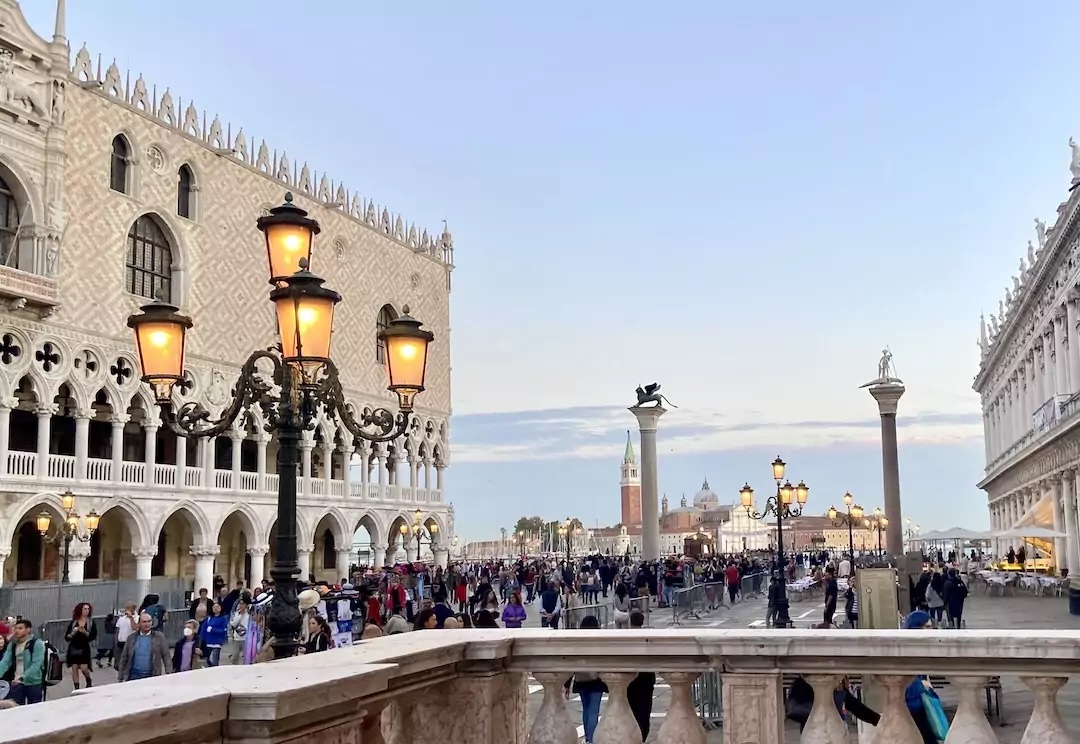
Venice is not just a beautiful city. It was once one of the most powerful city-states in Europe.
For centuries, the Doge’s Palace was the heart of the Venetian Republic. Behind its elegant pink-and-white façade, an empire based on trade and naval power gradually expanded.
Today, it is one of the most impressive sights in Venice. Inside, you’ll find vast ceremonial halls, works of art by some of Italy’s greatest masters, and more unexpected places such as the old prisons, connected to the palace by the famous Bridge of Sighs.
I have been lucky enough to visit the Doge’s Palace several times during my trips to Venice, and in this guide I’ll share all my best tips to help you make the most of your visit.
A quick tip before you go: the Doge’s Palace is one of Venice’s most popular attractions, so booking your tickets in advance is highly recommended. I also recommend visiting in the afternoon and setting aside plenty of time, as it’s easy to spend more than 2 hours exploring the palace!
☞ You should also read:
- The 10 Best Things To Do in Venice for Your First Trip
- Where to Stay in Venice, Italy? Best Areas & my Fav Hotels
- What Visitors Really Need to Know About Acqua Alta in Venice
Table of Contents
Why the Doge’s Palace is Much More Than a Palace (And Why You Should Visit it)
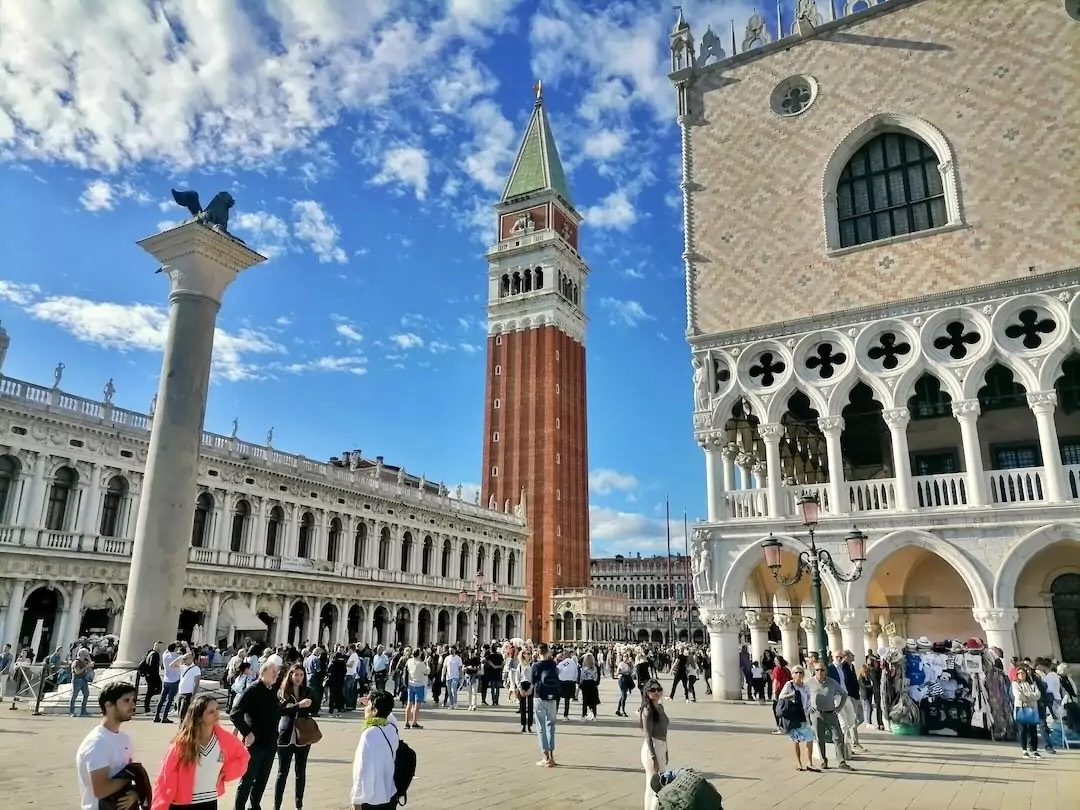
Located on St. Mark’s Square, the Doge’s Palace is one of Venice’s most famous landmarks. For centuries, it was the center of power in the Venetian Republic and helped shape Venice into one of the richest and most influential cities in Europe.
Most of the palace we see today dates back to the 14th century. It remained the official residence of the Doges until 1797, when the Venetian Republic finally came to an end.
But despite its name, the Doge’s Palace was never just a palace.
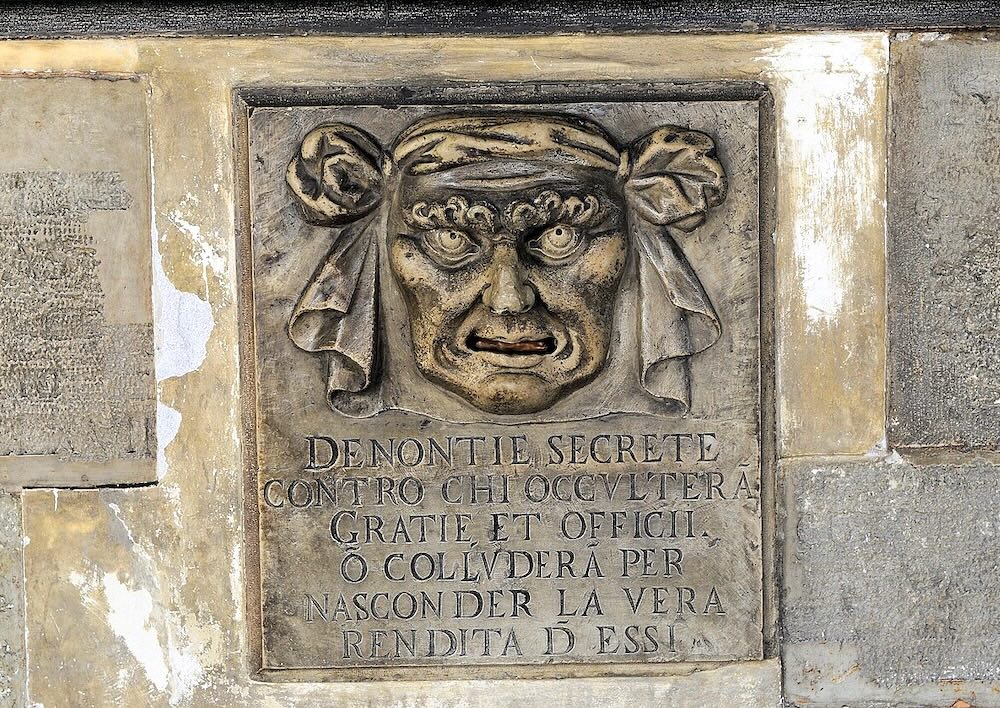
Of course, the Doge lived here. But the building was also home to the government, the courts, the administrative offices and even the city’s prisons.
That’s what makes the visit so interesting today!
💡 Who is this visit for?
If you’re curious about the history of Venice, this is one of the most rewarding visits in the city. More than just an art museum or a historic building, it offers a fascinating look at how Venice was governed for centuries, from politics and diplomacy to justice, prisons and secret passages.
What should you not miss inside the Doge’s Palace
The visit is divided into 3 main areas:
- The Doge’s Apartments, which include both the private rooms and the official state rooms
- The institutional chambers, where the Venetian Republic was governed for centuries.
- The former prisons.
Here are the highlights you should not miss during your visit:
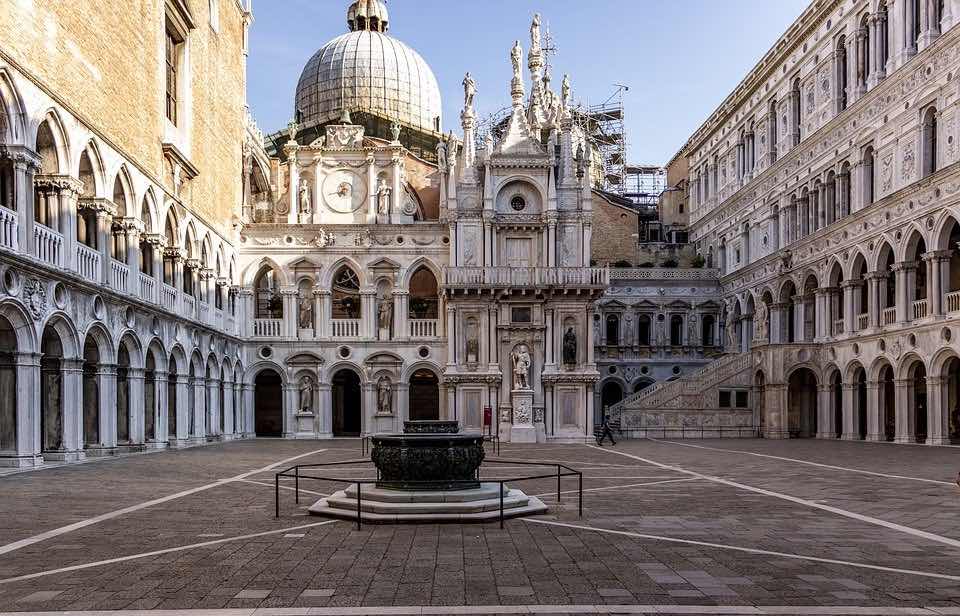
- The inner courtyard and the impressive Giants’ Staircase, where newly elected Doges were officially crowned in front of the people of Venice.
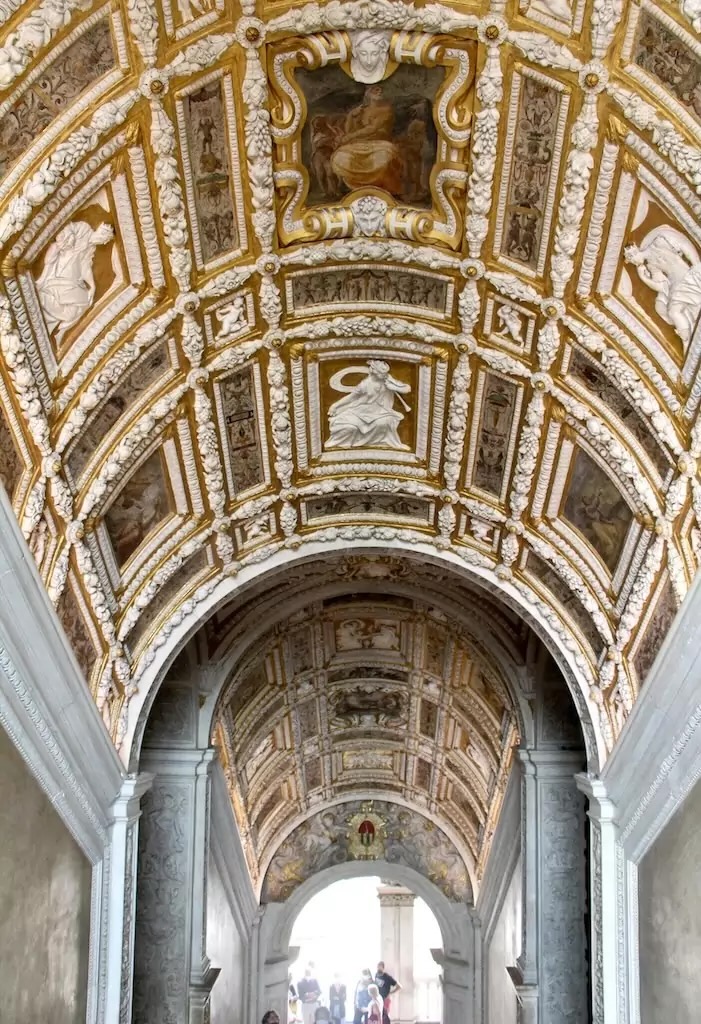
- The Golden Staircase (Scala d’Oro), famous for its richly decorated golden ceiling.
- The Hall of the Great Council, one of the most impressive rooms in the palace. Thousands of people once gathered here for political meetings and official ceremonies. It is also home to Paradise by Tintoretto, one of the largest paintings in the world.
- The Map Room, where giant maps of the known world cover the walls and offer a glimpse into how Venetians viewed the world centuries ago.
- The Armory, which displays an impressive collection of weapons, armor, swords and firearms once used to defend the Republic.
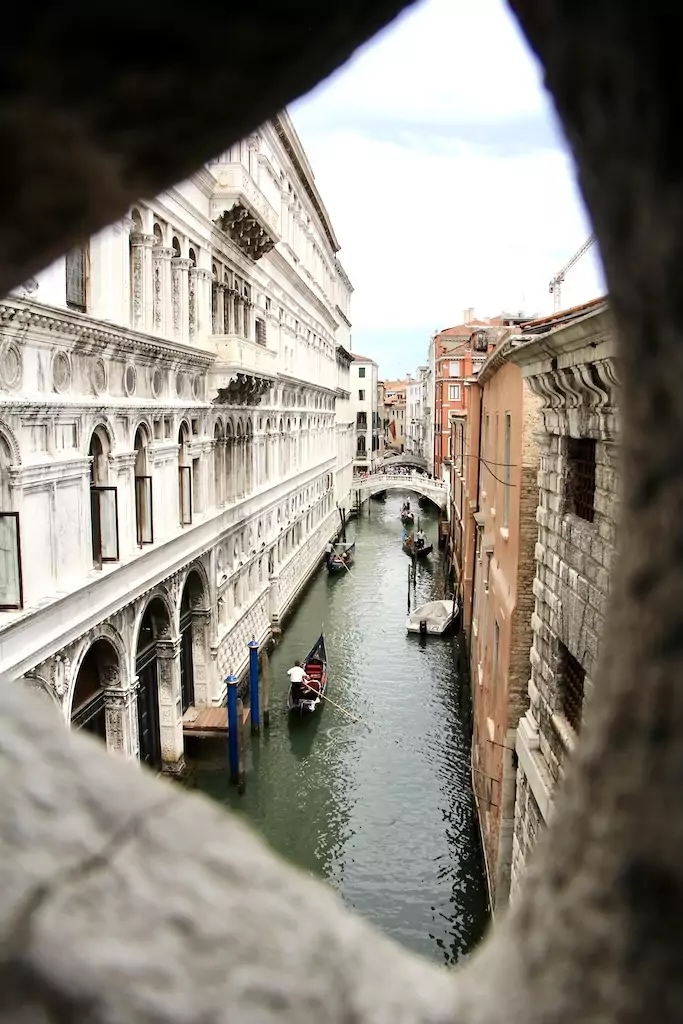
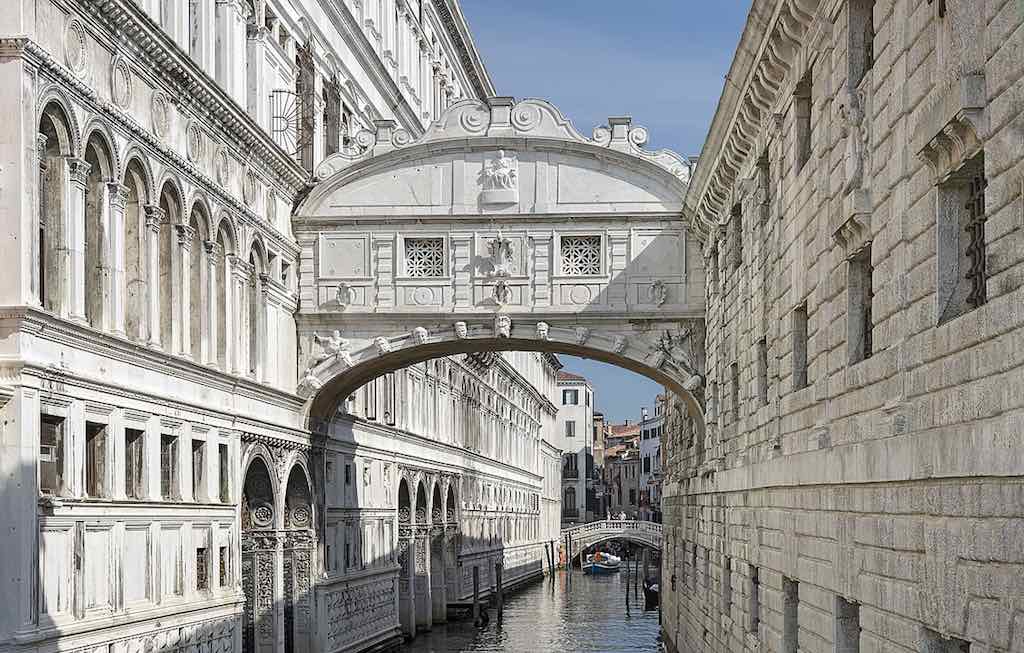
- Crossing the famous Bridge of Sighs on the way to the prisons. Prisoners walked through this enclosed bridge before being locked away, catching one final glimpse of Venice through its small windows.
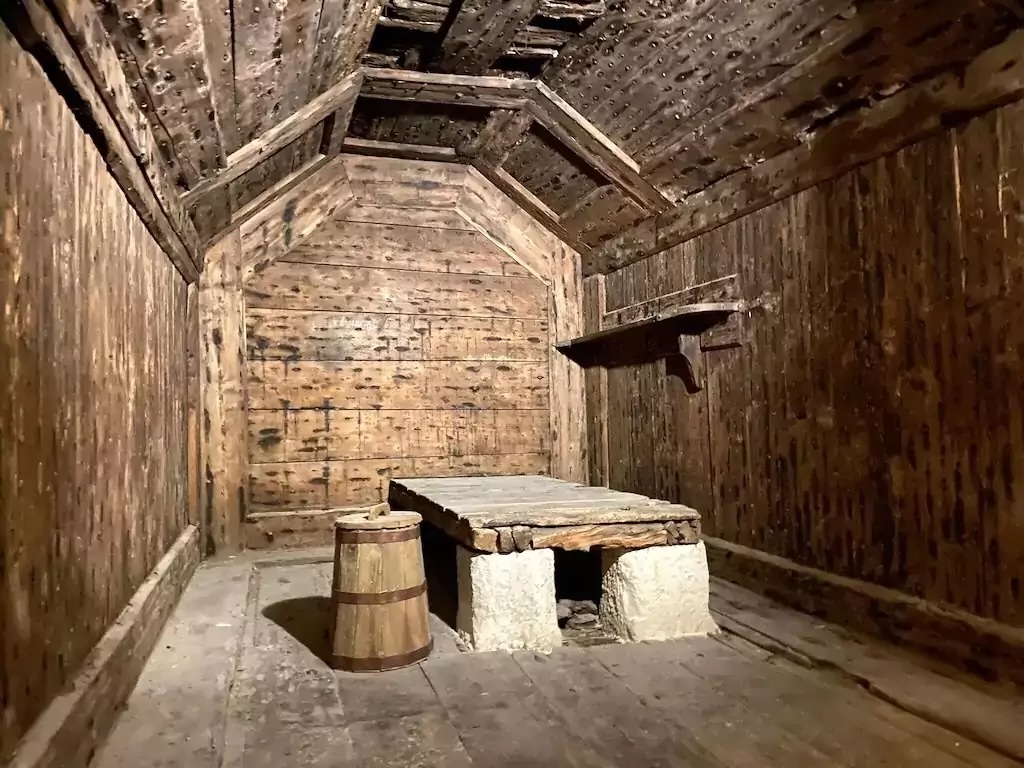
- The prisons, which still feel remarkably authentic today. They are also famous for being the place from which the legendary Casanova escaped in 1756.
💡 Good to know:
You’ll find basic information in English throughout the palace. For a more in-depth visit, I recommend downloading the free MUVE app before you go. It includes the official audio guide and provides plenty of additional information about the rooms, artworks and history of the palace. Just don’t forget your headphones!
What first-time visitors often underestimate
➜ Many people visit the Doge’s Palace expecting a quick tour focused mainly on the prisons and the famous Bridge of Sighs.
In reality, there are dozens of rooms to explore, including grand reception halls, government chambers, museums, armories, private apartments and former prisons. The prison section is actually only a part of the visit.
➜ Another thing many first-time visitors underestimate is how much time the palace requires. If you want to see everything properly and take time to admire the artwork and architecture, it’s easy to spend more than two hours here.
➜ If possible, try to visit in the afternoon. The palace is usually less crowded and the visit feels much more relaxed. Mornings tend to be the busiest time of day, especially on weekends and public holidays.
➜ And finally, don’t underestimate the queues.
The Doge’s Palace is one of the most visited attractions in Venice, and during busy periods, waiting times can range from 15 minutes to over an hour without a pre-booked ticket.
If you’re visiting during spring, summer or major holidays, I highly recommend booking your tickets in advance. It will save you time and make the whole experience much more enjoyable.
Tickets and Prices for the Doge’s Palace
Tickets for the Doge’s Palace start at €35 for adults.
Discounted tickets (€ 15) are available for: Children aged 6 to 14 ; Students aged 15 to 25 ; Visitors over 65.
Children under 6 enter free of charge.
• Official Doge’s Palace Skip-the-Line Ticket
This is the ticket I used during my first visit to the Doge’s Palace, and it’s still the option I would recommend to most visitors.
The ticket includes skip-the-line access, which can save a significant amount of time during the busiest months of the year. Instead of joining the regular queue, you can head straight to the entrance reserved for ticket holders.
Another advantage is that the ticket also includes access to the museums of St. Mark’s Square on the same day:
- The Correr Museum
- The National Archaeological Museum
- The Monumental Rooms of the Marciana Library
While many visitors focus only on the palace itself, I actually think these museums are a great addition to the experience. Together, they provide a much broader understanding of Venice’s history, from its earliest origins to the present day.
Guided Tours of the Doge’s Palace
A guided tour is a great way to get more out of your visit. Beyond the beautiful rooms and artworks, you’ll discover fascinating stories, political intrigue and surprising details that are easy to miss on your own.
Here are the main guided tour options available in English:
• Guided Tours Available On-Site (No Reservation Required)
Short guided tours of the Doge’s Palace are offered on-site in several languages, including English. Departure times vary throughout the day and can be checked at the entrance.
Duration: approximately 1 hour.
• Combined Guided Tour of the Doge’s Palace and St. Mark’s Basilica
If you’re visiting Venice for the first time, this is probably one of the best guided tours available.
It combines the city’s two most important landmarks and provides an excellent introduction to Venice’s history, art and political power. Tours are led by experienced guides and include the highlights of both monuments.
Duration: approximately 3 hours.
• Secret Itineraries Tour of the Doge’s Palace
If you’d like to explore a side of the Doge’s Palace that most visitors never see, this is the tour I would recommend.
The Secret Itineraries Tour takes you behind the scenes of the Venetian Republic and gives access to rooms that are not included in the standard visitor route. You’ll discover hidden passageways, secret chambers, interrogation rooms, administrative offices and prison cells that played an important role in the government of Venice.
It’s one of the most fascinating ways to understand how power, justice and politics worked in the Venetian Republic.
Duration: approximately 1 hour 15 minutes.
💡 Which tour should you choose?

If this is your first visit to the Doge’s Palace, I would recommend starting with the standard
visit (guided or self-guided). It includes the palace's most spectacular rooms, grand ceremonial
halls and famous artworks — the places that create the real "wow" factor of the visit.

The Secret Itineraries Tour is best seen as an add-on rather than a replacement. While it gives
access to fascinating hidden areas, it does not include many of the palace's most beautiful and
iconic rooms.

If you only have time for one visit, choose the classic route. If you're particularly interested
in Venice's political history, prisons and behind-the-scenes stories, then the Secret Itineraries
Tour is an excellent addition.
⚠️ Good to know:
Places for the Secret Itineraries Tour are limited and often sell out in advance, especially during the high season. If this tour interests you, I strongly recommend booking as early as possible.
Opening Hours of the Doge’s Palace
The Doge’s Palace is open 7 days a week, including weekends and public holidays. It closes only twice a year: January 1st and December 25th.
Opening hours vary depending on the season:
- Winter opening hours (November 1st to March 31st): 9:00 AM to 6:00 PM (last admission at 5:00 PM)
- Summer opening hours (April 1st to October 31st): 9:00 AM to 7:00 PM (last admission at 6:00 PM)
💡 Good to know:
During the summer season (usually from early May to late September), the palace stays open later on Friday and Saturday evenings. Closing time is extended until 11:00 PM, with last admission at 10:00 PM.
If you’re spending a few days in Venice, I highly recommend taking advantage of one of these evening openings.
The atmosphere inside the palace feels completely different after sunset, and it’s also a great way to avoid some of the daytime crowds. Even if you’ve visited before, it’s a surprisingly unique experience.
Other Things to See Near the Doge’s Palace
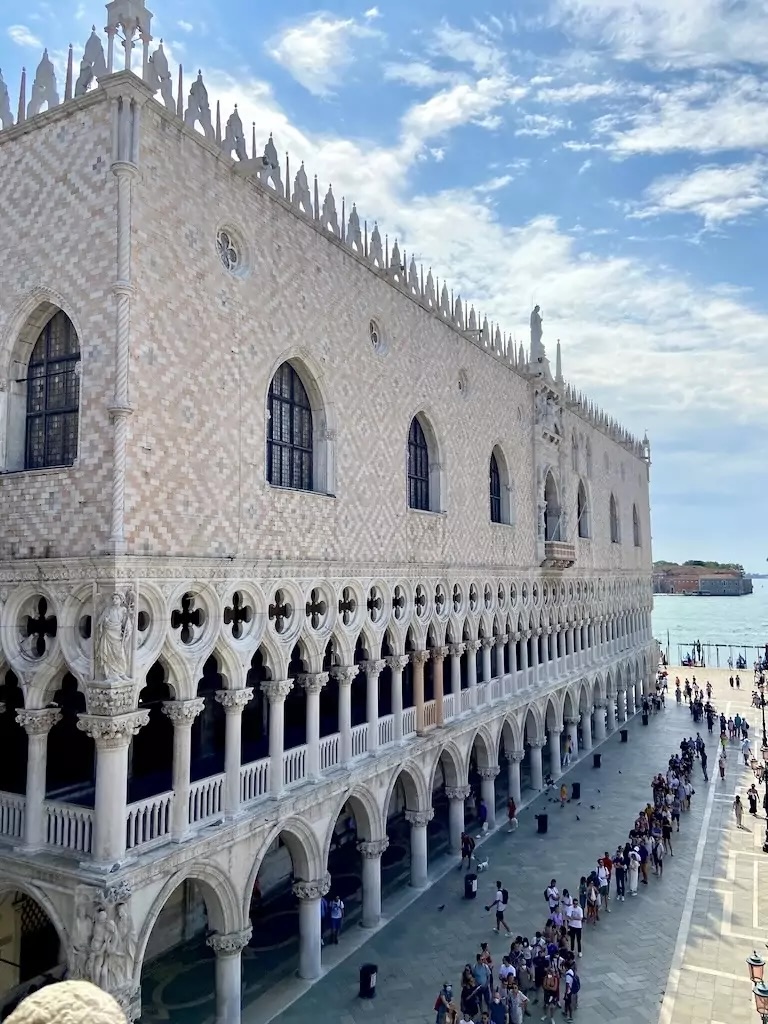
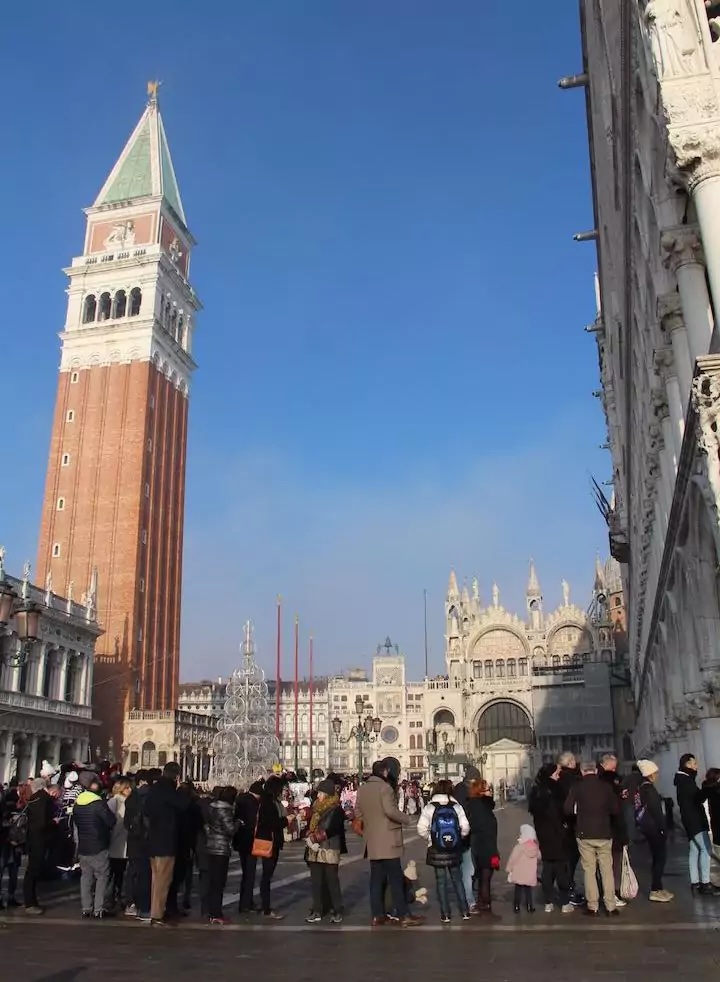
The Doge’s Palace sits right next to St. Mark’s Square, in the most famous part of Venice.
Many of the city’s top attractions are just a short walk away:
➜ St. Mark’s Square
The heart of Venice and one of the most beautiful squares in Europe.
Come during the day to admire the architecture, then return in the evening when the crowds are gone and the atmosphere feels completely different.
➜ St. Mark’s Basilica
One of the most spectacular churches in the world. Famous for its golden mosaics, Byzantine architecture and beautiful terraces overlooking St. Mark’s Square.
☞ Also read: How to Visit St. Mark’s Basilica in Venice: Tips & What Not to Miss
➜ St. Mark’s Campanile
Venice’s famous bell tower. An elevator takes you to the top for one of the best views in the city.
➜ The Bridge of Sighs
You’ll cross the bridge during your visit to the Doge’s Palace. To see it from the outside, head to the nearby Ponte della Paglia.
➜ The Museums of St. Mark’s Square
A great way to learn more about Venice’s history, from its earliest days to the present day. The perfect complement to a visit to the Doge’s Palace.
And that’s it! I hope this guide has given you all the information you need to make the most of your visit to the Doge’s Palace.
If you still have any questions, feel free to leave a comment below. I’ll be happy to help 🙂
One Last Word: This article is an English adaptation of an original French post published on passion-venise.fr
It is the result of many hours of work. If you found it useful, you can support my work by using the booking links included in this article. Some of them are affiliate links, which means I may earn a small commission — at no extra cost to you. This helps me continue creating 100% independent and free content. Thank you so much for your support ♥︎