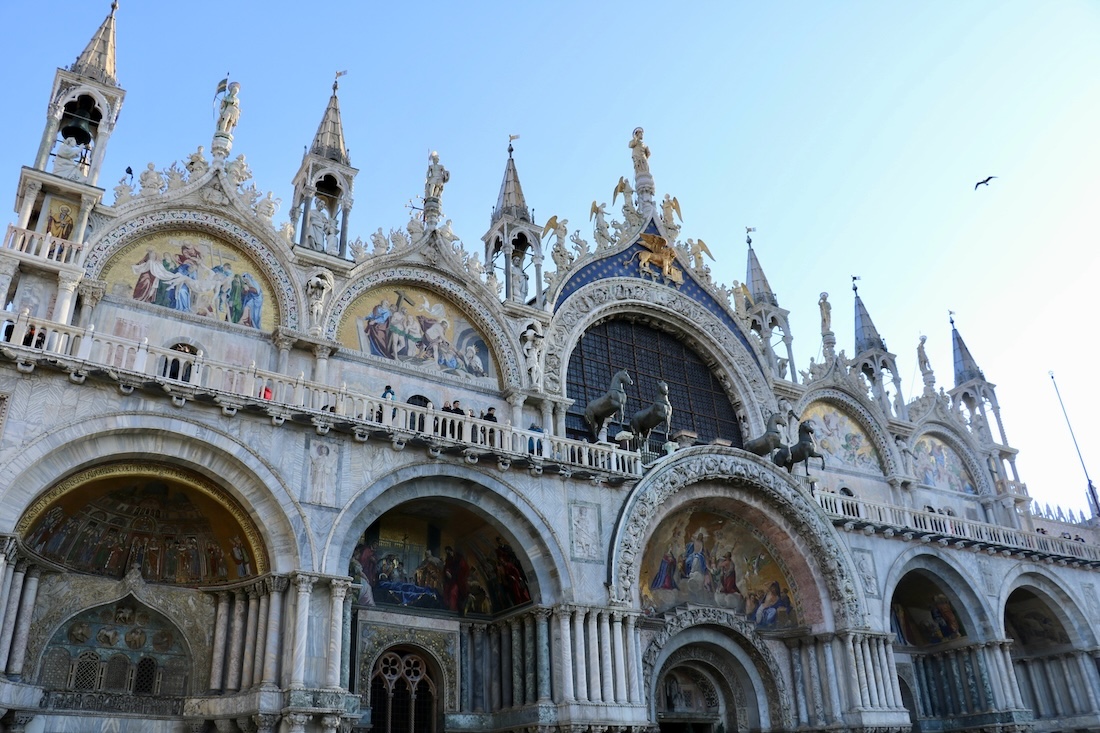
Impossible not to visit St. Mark’s Basilica during a trip to Venice.
Honestly, it would almost be worth the trip on its own!
After many trips to Venice, it’s finally time for me to dedicate a complete guide to this incredible place. And after visiting it several times, I now know all the tips that can make the experience much more enjoyable — especially since the crowds can be intense.
Unlike the more traditional churches you may see elsewhere in Italy or in Europe, St. Mark’s Basilica feels completely different. More mysterious… and above all, incredibly golden!
The first time I stepped inside, I honestly did not expect to see so many mosaics and so much gold everywhere.
So here’s everything you need to know to visit St. Mark’s Basilica without missing the best parts 🙂
☞ You should also read:
- Where to Stay in Venice? Best Areas & my Fav Hotels
- The Best Restaurants in Venice: My Favorite Places to Eat
Table of Contents
Why You Should Absolutely Visit St. Mark’s Basilica in Venice
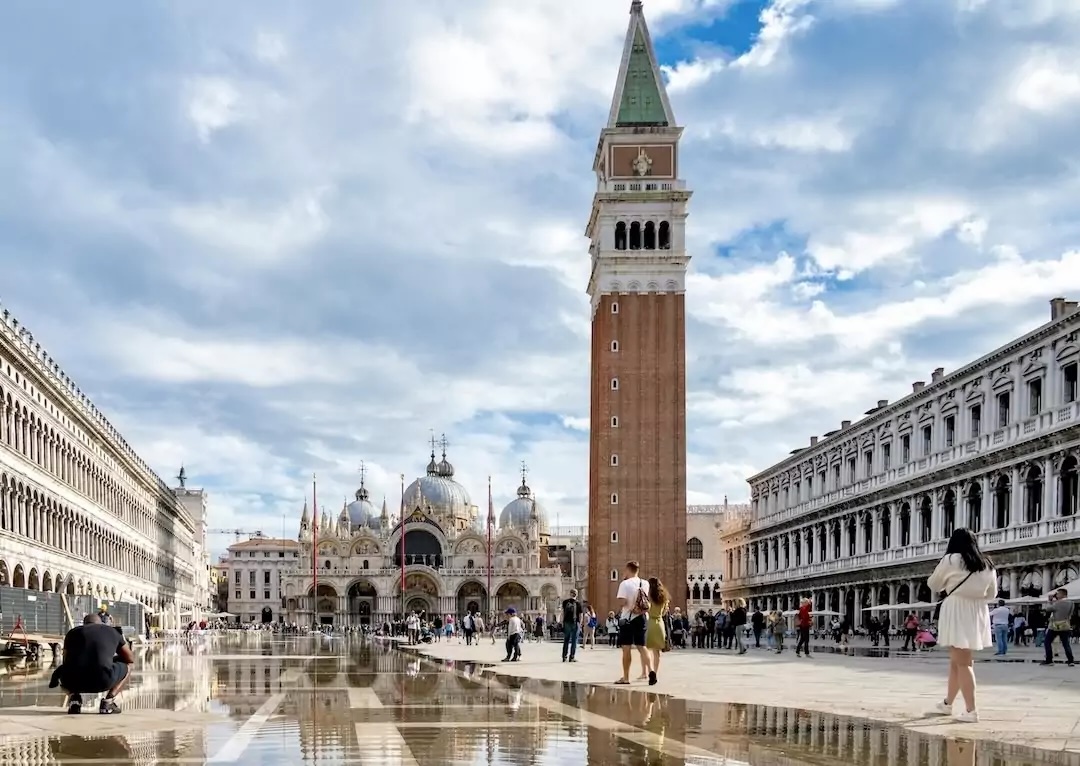
Located right on St. Mark’s Square, St. Mark’s Basilica is one of the most extraordinary landmarks in Venice — and honestly, one of the most surprising churches in Europe.
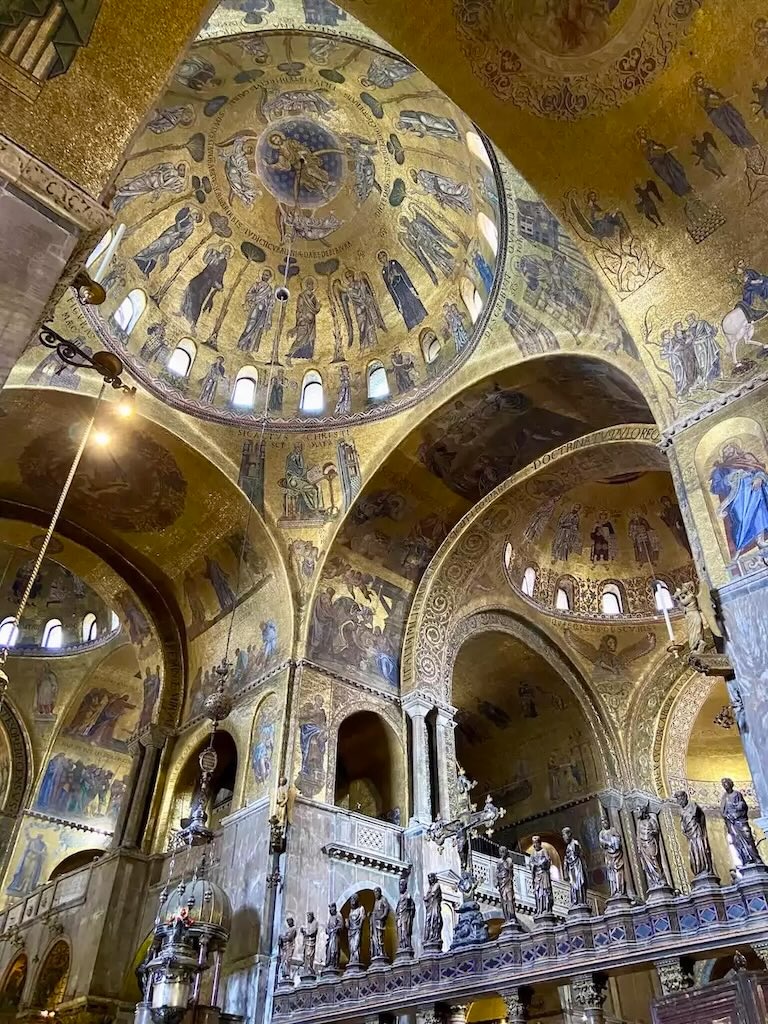
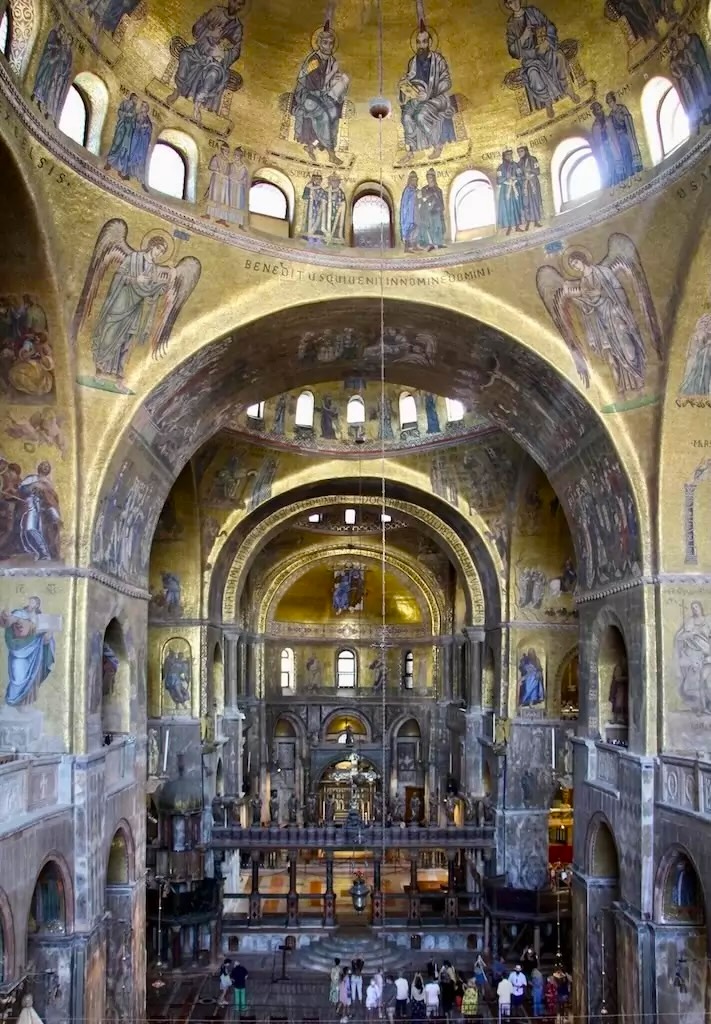
What makes it so special is its Byzantine atmosphere, world-famous for its golden mosaics covering the ceilings.
The interior is absolutely spectacular to admire,
but the basilica is also an incredible architectural achievement.
Believe it or not, the entire building rests on around 100,000 wooden piles driven deep into the Venetian lagoon.
It’s also an incredibly ancient monument.
The basilica we see today began construction in 1063 and was gradually enriched and transformed over the centuries.
In just a few decades, it will celebrate its 1,000th anniversary.
And finally, something many visitors don’t know before visiting: the basilica is also home to remarkable works of art, including:
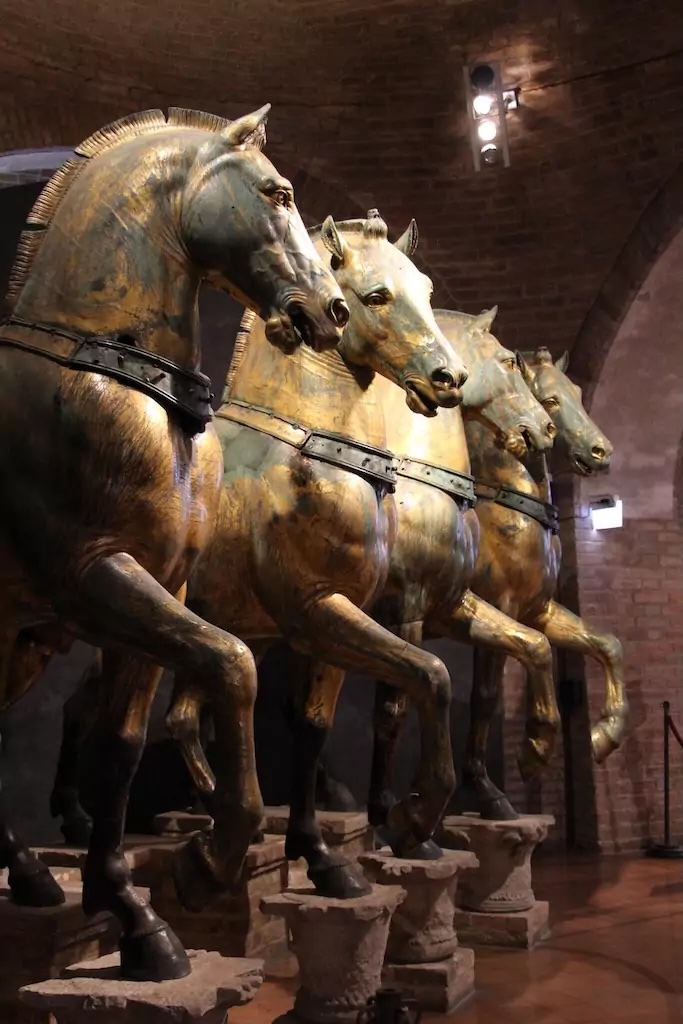
- the famous Horses of St. Mark (displayed in the museum), originally brought from Constantinople by the Venetians in 1204.
- the magnificent Pala d’Oro, an extraordinary altarpiece covered in gold and thousands of precious stones.
What to Know Before Visiting St. Mark’s Basilica
To make the most of your visit, here are a few important things to know before going:
➜ Without a reservation, waiting lines can be huge
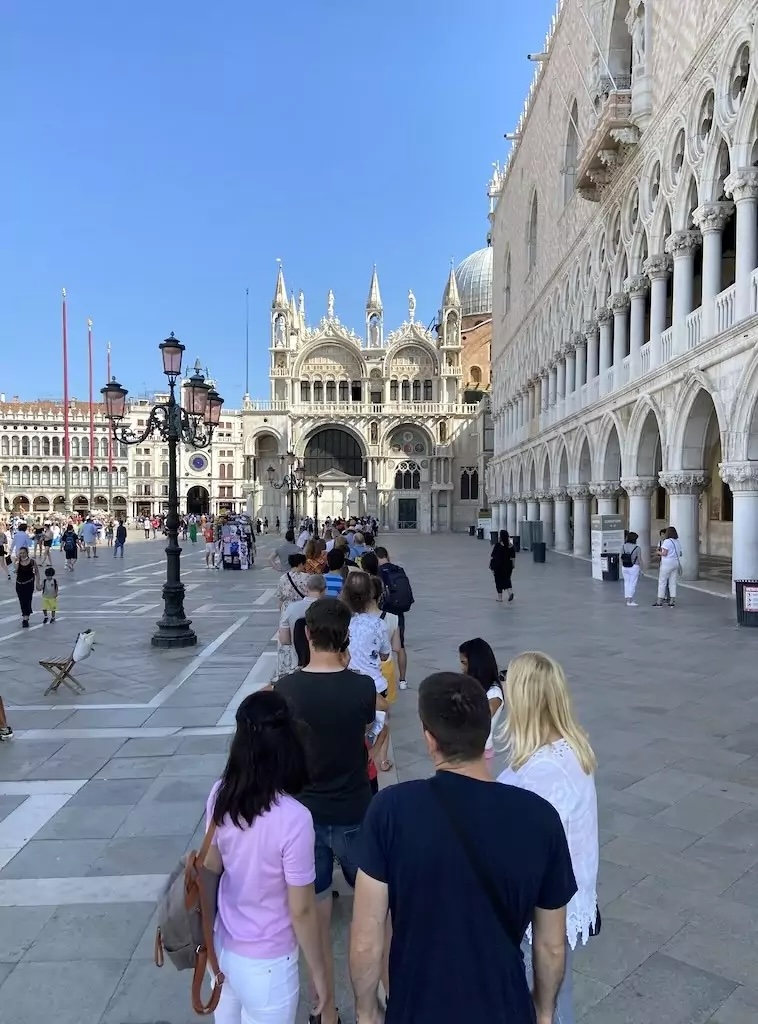
Every year, the basilica welcomes around 5 million visitors.
It’s the most visited monument in Venice.
As a result, lines are often extremely long, and skip-the-line tickets are highly recommended if you don’t want to waste valuable time waiting outside.
➜ Make sure you join the right line!
There are two separate lines in front of the basilica.
Facing the building:
- the line on the right (usually the longest) is for visitors without tickets
- the line on the left is for visitors who already have tickets, skip-the-line access, or guided tours
Definitely worth checking before you queue 🙂
➜ A proper dress code is required
Like all Christian religious sites, the basilica enforces a dress code.
Tank tops, very short skirts, and shorts above the knee are not allowed.
Staff members do pay attention to this.
In practice, the main rule is simple: keep your shoulders covered and avoid overly revealing clothing.
This is especially important in summer.
I’ve often seen visitors turned away because of spaghetti straps or very light outfits.
So during warmer months, it’s a good idea to carry: a light sweater ; a scarf or shawl ; or something to cover your shoulders
And if needed, vendors around St. Mark’s Square usually sell scarves nearby.
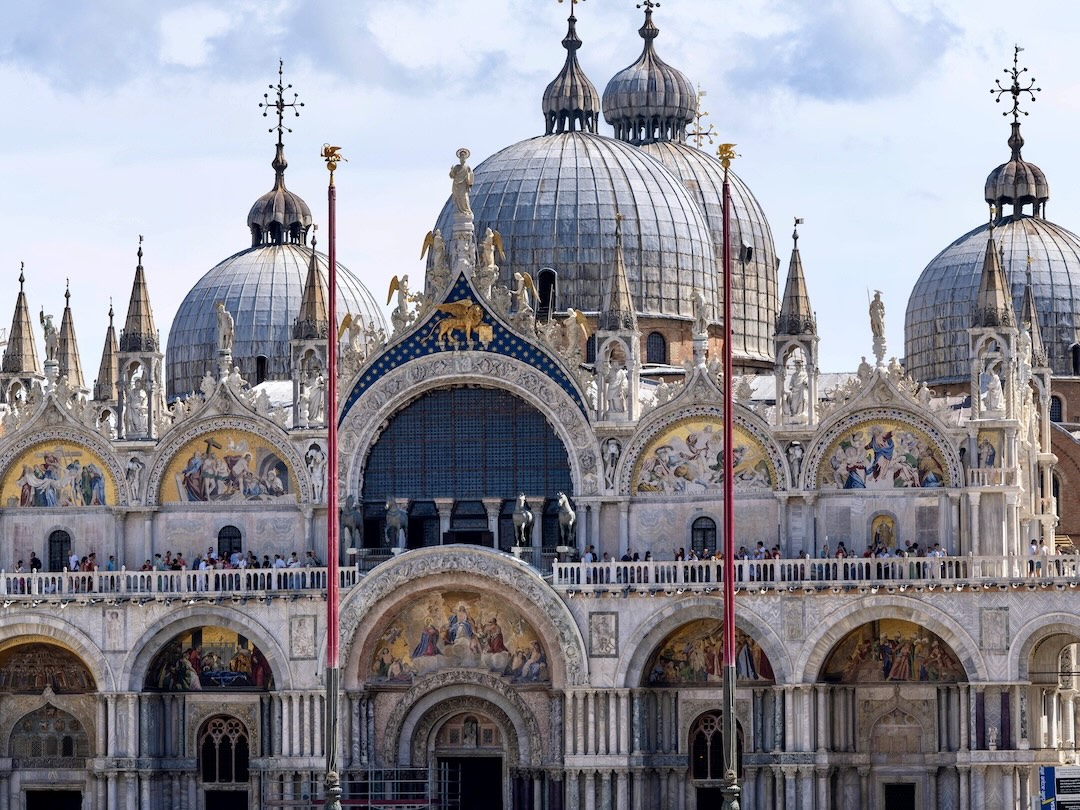
➜ The basilica is fully illuminated for one hour each day
Usually between 11:30 AM and 12:30 PM.
This is one of the best times to visit,
because the golden mosaics become absolutely spectacular under the lights.
➜ Large backpacks are not allowed inside
You’ll only know at the entrance whether your bag is accepted or not.
A free luggage storage service is available a few minutes away in Calle San Basso,
but to avoid unnecessary detours, it’s best to visit with a small bag — or no bag at all.
What Can You See Inside St. Mark’s Basilica?
The basilica is divided into different areas and some sections are only accessible with specific tickets.
• The Main Floor
This is the main visiting area — and also the busiest.
A one-way route guides visitors through the ground floor, where you can admire:
– the marble mosaic floors
– the famous golden ceilings
– the chapels
– the nave
– and the choir with its impressive main altar
⚠️ Good to know:
Even though it’s located in the choir on the main floor, the famous Pala d’Oro is not included with standard entrance tickets.
This section requires an additional ticket or upgrade (see the “Prices” section below for more details).
• The Museum
Located on the upper level of the basilica, the museum displays many objects linked to the history of St. Mark’s Basilica.
The highlight is undoubtedly the famous Horses of St. Mark — ancient bronze sculptures dating back to the 4th century, now considered one of Venice’s great symbols.
The statues visible outside today are actually replicas, used to protect the originals.
• The Terraces
One of the most enjoyable parts of the basilica.
Much quieter than the main floor, the terraces are the perfect place to slow down and take in the view.
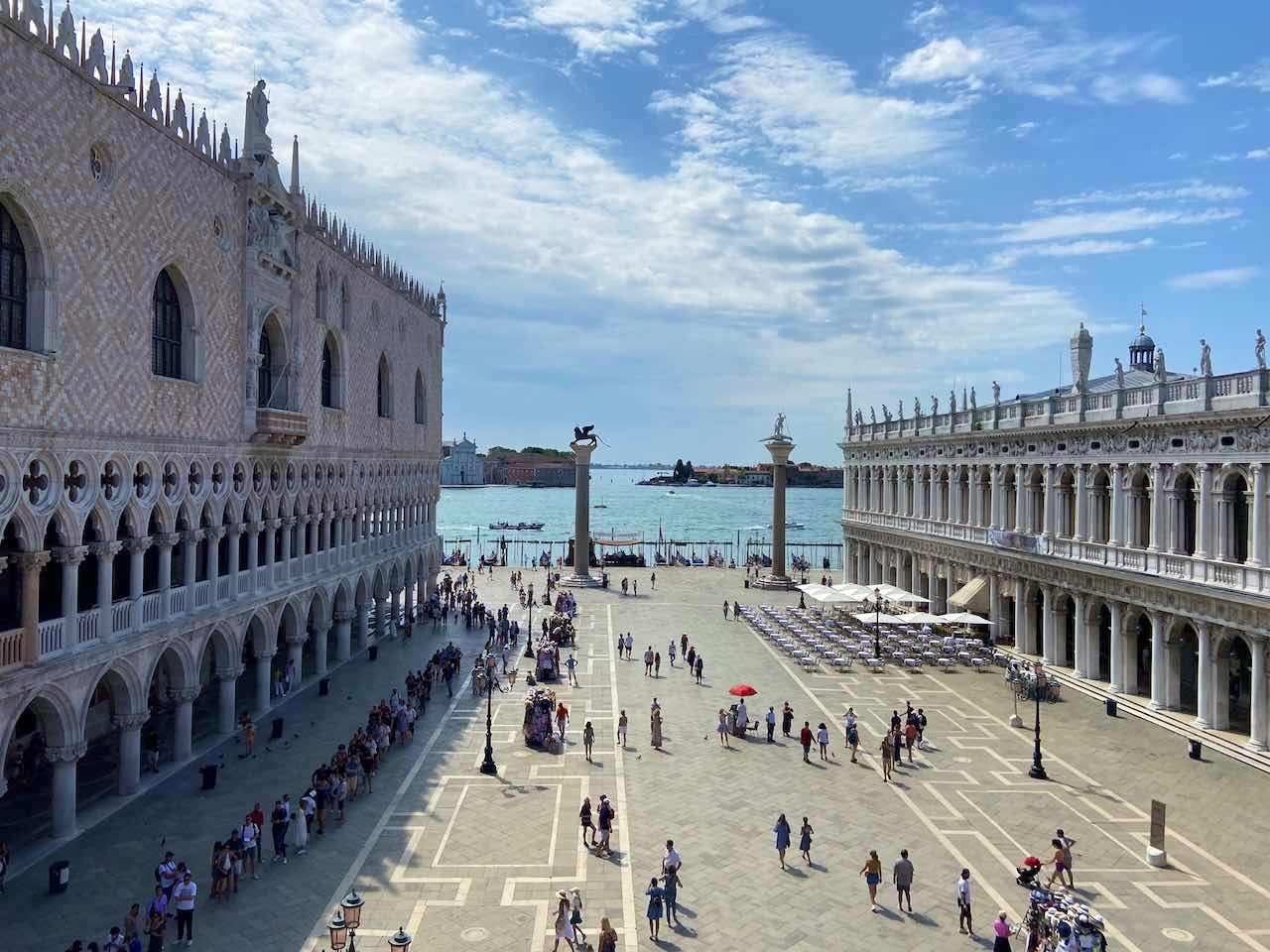
From here, you can admire the entire St. Mark’s Square below and the waters of the Venetian lagoon.
What Is the Best Time to Visit St. Mark’s Basilica?
Without a doubt: early in the morning, right at opening time.
If you’re not planning to buy a skip-the-line ticket, don’t hesitate to arrive before the basilica opens.
You might be among the first visitors allowed inside — which makes a huge difference.
The same applies if you do have a skip-the-line ticket: try to enter as early as possible.
It takes a little while before the basilica becomes fully crowded.
Another excellent moment to visit is during the daily lighting period, usually between 11:30 AM and 12:30 PM.
The golden mosaics become even more spectacular under the lights,
especially when viewed from the museum level or near the terraces.
But yes… it’s also one of the busiest times of the day.
Prices, Tickets and Guided Tours
The basic entrance ticket for the self-guided visit of the main floor costs €3 per person — but be prepared for a very long waiting line without skip-the-line access.
Additional areas require extra tickets:
+ €5 for access to the choir and the famous Pala d’Oro
+ €7 for access to the upper galleries, including the museum and terraces
+ €5 for the audio guide
In total, a full self-guided visit of the entire basilica (without skip-the-line access) costs around €20 per person.
• Skip-the-Line Tickets
This ticket gives you access to a self-guided visit of the basilica, with two possible options:
– main floor only (from €25 per person)
– or the full route including the museum and terraces (around €45 per person)
In both cases, the audio guide is included.
This is personally the option I prefer for visiting the basilica.
You get access to the most exclusive areas while still enjoying all the explanations from the audio guide.
And above all… you avoid waiting outside for over an hour before even entering.
Without skip-the-line access, you can easily spend half a day around the basilica (waiting time + visit),
while the full visit itself usually takes around 1 to 1.5 hours (around 15/20 minutes for the ground floor only).
→ Check availability for skip-the-line tickets
• Guided Tours
Guided tours are always a great way to learn fascinating details about the monument, with plenty of surprising stories and historical anecdotes along the way.
The most popular option is the combined guided tour of St. Mark’s Basilica and the Doge’s Palace,
perfect for discovering Venice’s two most iconic landmarks in a single visit.
Duration: around 3 hours.
There are also guided tours focused only on the basilica, including the main floor, museum, and terraces.
Duration: around 1 hour.
How Long Is the Wait to Enter St. Mark’s Basilica With no Skip-the-Line Tickets?
Waiting times for standard entrance tickets may vary.
During high season (from April to October) and on particularly busy days, it’s not unusual to wait around one hour before entering.
During low season (from November to March), waiting times are generally shorter — especially on weekdays — usually between 15 and 30 minutes.
Opening Hours and Days
St. Mark’s Basilica is open 7 days a week, including Sundays and public holidays (with adjusted opening hours).
- Monday to Saturday:
Open from 9:30 AM to 5:15 PM
(last admission at 4:45 PM) - Sundays and public holidays:
Open from 2:00 PM to 5:15 PM
(last admission at 4:45 PM)
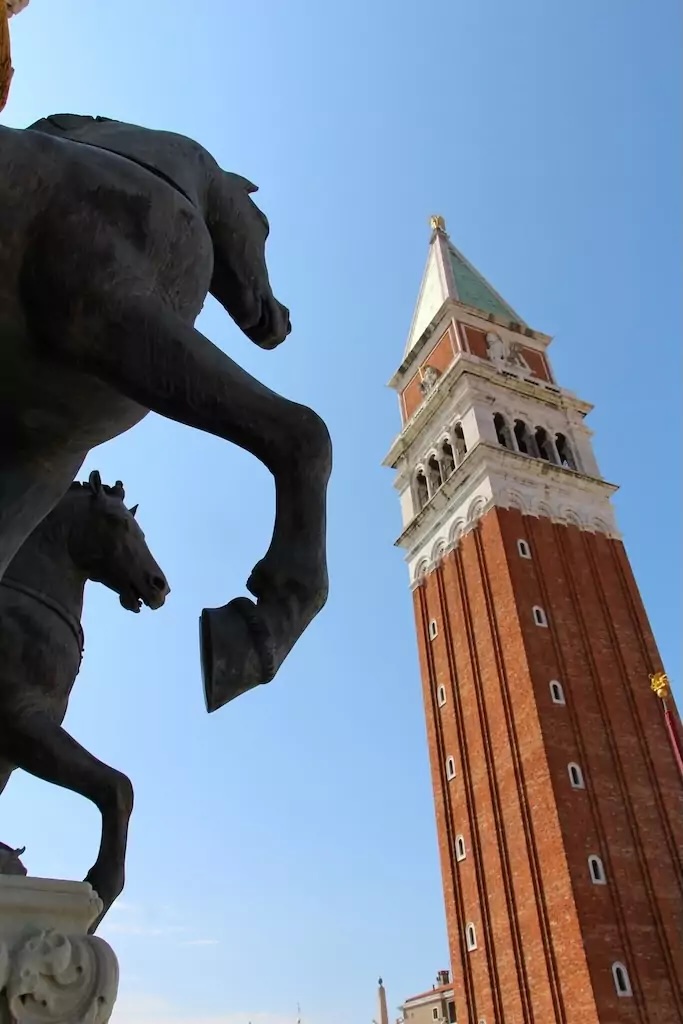
What to Do Around St. Mark’s Basilica
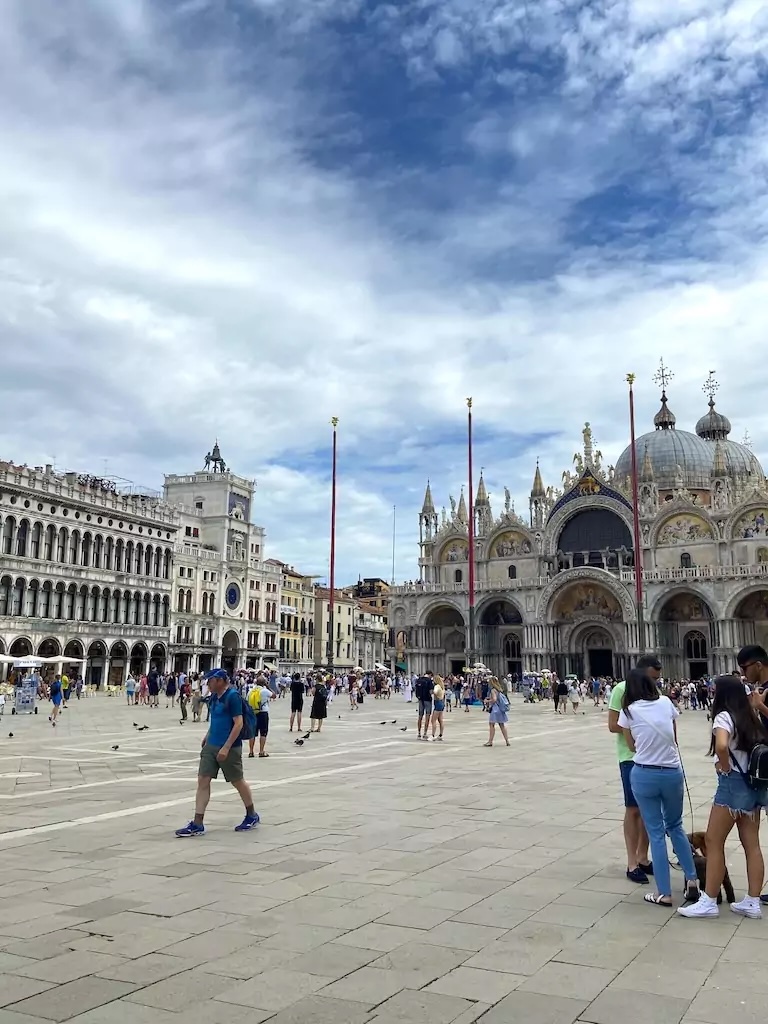
The basilica is located in the most touristic part of Venice — the San Marco district, right on St. Mark’s Square.
So naturally, there’s a lot to see and do nearby 🙂
Here are the highlights:
➜ St. Mark’s Square
Impossible to visit Venice without coming here.
It’s one of the most beautiful places in the city, with its elegant arcades, iconic cafés, and truly unique atmosphere.
Absolutely worth seeing during the day… but also in the evening, when the square becomes much quieter and peaceful.
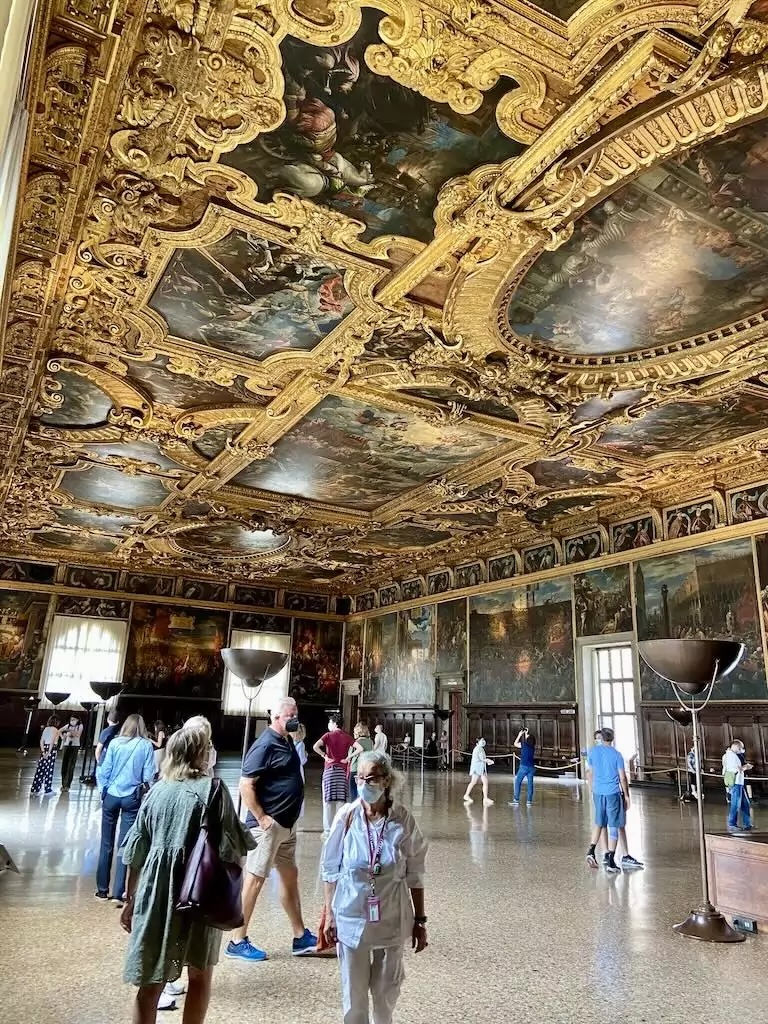
➜ Doge’s Palace
The former heart of Venetian power.
Visiting the palace is one of the best ways to understand the history of the Venetian Republic.
The interiors are spectacular,with richly decorated halls and access to the old prisons.
⚠️ Waiting lines here can also be very long, so booking tickets in advance is highly recommended.
➜ The Campanile
The famous bell tower overlooking the square offers panoramic views over Venice and the lagoon.
An elevator takes visitors to the top, and the view is absolutely worth it.
➜ The Bridge of Sighs
Located just behind the Doge’s Palace, this bridge once connected the courtrooms to the prisons.
Its name comes from the sighs of prisoners catching one final glimpse of Venice before imprisonment.
➜ The Museums of St. Mark’s Square
Also known as the Correr Museum, the Archaeological Museum, and the monumental rooms of the Marciana Library.
Perfect for learning more about the city’s rich history, from prehistoric times to modern Venice.
➜ Gondola rides near St. Mark’s Square
You can also take a gondola ride close to the basilica.
The nearby gondola stations offer shared gondola tours (up to 5 passengers), allowing you to explore the canals of San Marco
as well as part of the Grand Canal.
And that’s it!
You now have everything you need to plan your visit to St. Mark’s Basilica.
If you still have any questions, feel free to leave a comment — I’ll be happy to help 🙂
One Last Word: This article is an English adaptation of an original French post published on lauraenvoyage.fr
It is the result of many hours of work. If you found it useful, you can support my work by using the booking links included in this article. Some of them are affiliate links, which means I may earn a small commission — at no extra cost to you. This helps me continue creating 100% independent and free content. Thank you so much for your support ♥︎